First personal training session: what to expect
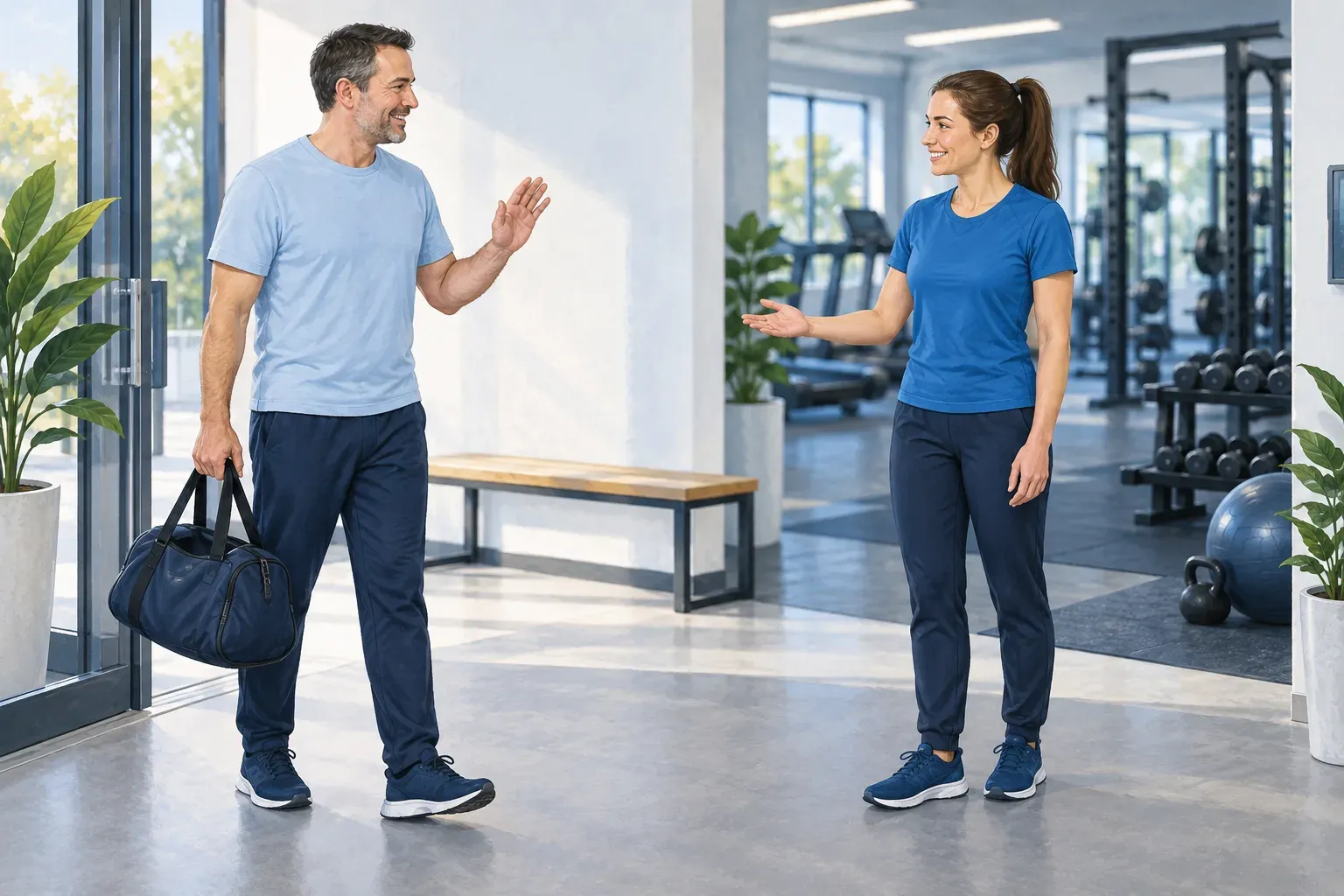
Your first personal training session is an opportunity to discuss your goals, experience and wellbeing, try suitable exercises and agree on next steps. The format depends on you and the service booked, so confirm it beforehand. You do not need to get fit or learn the equipment first: the meeting helps establish an appropriate starting point.
Check what your first appointment includes
An initial consultation and a workout may be separate appointments. Sometimes the first meeting focuses on your needs and a plan; sometimes that conversation happens during a gym session. Ask what you are booking, how much time to allow, where to meet and whether gym admission is included. Leave time for travelling, changing and getting back to work.
Fedo Physique lists a free initial consultation and individual training at Klaipėdos baseinas, Dubysos g. 12. Find current terms, prices and contact details on the personal training page. The elements below describe possible first-session activities; agree on your actual appointment with the trainer. Mention when booking whether you are a complete beginner or returning after a break.
Describe your goals in everyday terms
You need not arrive with a target body weight or sporting result. Learning basic exercises, feeling comfortable in the gym, becoming stronger or establishing a weekly routine are useful starting points. Everyday examples clarify expectations: carrying shopping more easily, preparing for an active holiday or maintaining an exercise habit during busy working weeks.
Write down your main goal and two possible obstacles. Perhaps you can attend only in the morning, work changing shifts or previously stopped because a programme felt too complicated. These details make the conversation specific. Mention activities you enjoy and how you prefer to learn: detailed explanations, a calm pace or short instructions. This helps you discuss a workable coaching relationship.

Share relevant health and exercise history
Think about previous training, long breaks and movements that feel uncomfortable. Mention known health conditions, previous injuries and any restrictions advised by your doctor. ACE's professional guidance connects health-history discussions with selecting assessments and deciding when to seek medical advice before exercise. Be honest about your starting point rather than trying to appear more experienced.
Prepare to discuss medication and any professional advice about exercise. Health uncertainties should not be resolved by trying a harder movement. Ask what information is missing and whether another professional should be consulted first. Arrange a private way to share relevant information instead of posting medical documents publicly. Also explain how you feel today and whether anything has changed since booking.
What to bring and how to prepare
Choose clothing that lets you squat, bend and raise your arms comfortably. Familiar clothes are fine; a new expensive outfit is unnecessary. Check footwear requirements and venue rules beforehand. Pack water, a towel and whatever you need for changing. If you are going straight to work afterwards, prepare for that too, so the closing conversation need not be rushed.
Allow time to arrive calmly and discuss next steps before leaving. There is no need to experiment with supplements or energy drinks for this appointment. If you have questions about meal timing or particular needs, raise them when booking instead of copying somebody else's routine. Save your main questions on your phone: unfamiliar surroundings can make them easy to forget.
An initial assessment is an introduction, not an exam
The trainer might ask you to perform simple movements, demonstrate a familiar exercise or describe your usual activity. Ask what each assessment is for and how it will inform training. Comparing yourself with someone nearby adds little: show your current experience and ask the trainer to explain the next step and its purpose.
If you do not know how to adjust a machine seat, say so. Learning the equipment can be useful first-session work. Before weighing, measurements or photographs, ask their purpose and explain any objections. Discuss alternative progress indicators, such as understanding exercises or attending regularly. A single task on your first day should not be expected to describe your entire fitness level.
Warming up and learning the first exercises
A gradual introduction allows you to settle in, warm up and move into the chosen exercises. The NHS recommends warming up before more demanding activity. Agree on the warm-up with your trainer; you need not complete an online routine before meeting. Ask which movements prepare you for today's session and which you could later repeat independently.
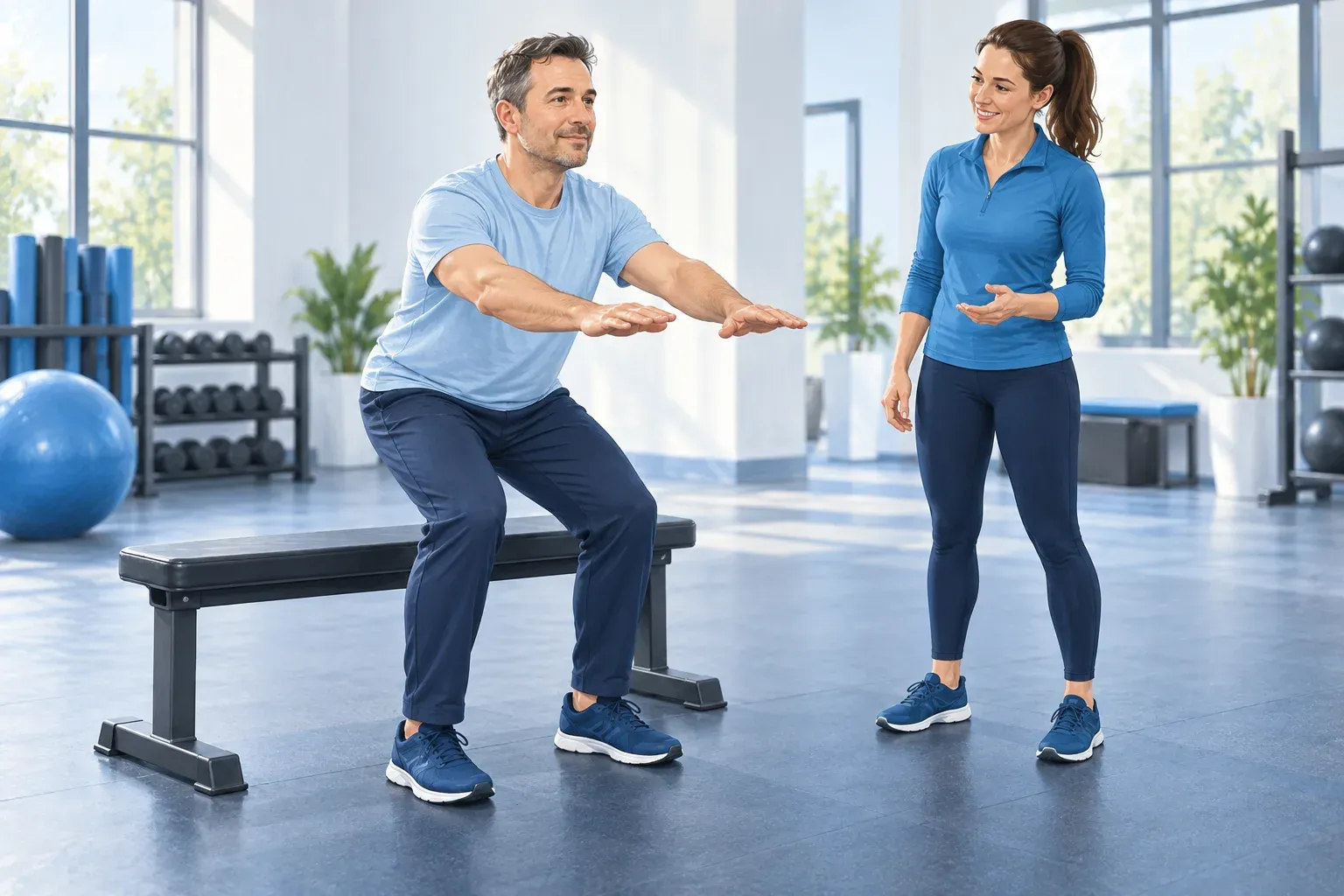
When learning an exercise, watch a demonstration, try it and ask for one clear correction. Request another demonstration or different wording if necessary. You may understand foot placement but be unsure how far to lower a weight. Clarify one movement before collecting too many instructions. Afterwards, repeat the key cue in your own words to check that you understood it.
How hard should the first session feel?
Choose starting tasks that leave room to learn, ask questions and make adjustments. There is no need to arrive with a required dumbbell weight or repetition target. Discuss how the initial load will be selected and when to rest. If you can only rush through a movement or lose track of instructions, say so before another set.
For aerobic activity, the CDC describes the talk test: at moderate intensity you can talk, but singing becomes difficult. This is an aerobic guide; discuss resistance-training loads separately. Stop the exercise and tell your trainer if you experience pain or feel unwell, as NHS guidance also advises. Seek healthcare advice when needed.
Explain the support you need
Your trainer can observe movement, but needs you to describe how it feels. Instead of simply saying it is hard, explain that you do not understand the movement, the handle slips, the position feels uncomfortable or you need more rest. Mention if several instructions at once are overwhelming. Asking for a slower explanation or another variation is part of working together.
Communication preferences matter too. If you prefer verbal guidance or demonstrations, explain this before any hands-on correction. If being watched worries you, ask whether a quieter gym area is available. Your trainer cannot guess every concern. Use the meeting to assess whether you can ask freely, understand explanations and have your feedback heard.
Agree on a plan before you leave
Clarify what you learned, what to do before the next meeting and when progress will be reviewed. For independent exercise, ask for clear tasks and limits. Seeing a movement once may not be enough to remember equipment settings tomorrow. Write down important details and agree on how to report changes in how you feel or ask follow-up questions.
Match the weekly plan to your available time. The NHS advises increasing activity gradually. Discuss specific appointment times and a fallback if work plans change. Before booking further sessions, check that the proposed frequency, price and communication arrangements suit you. Knowing the purpose of the next meeting makes it easier to plan that next step.
Frequently asked questions
Should I exercise on my own before my first session?
You do not need to reach a particular fitness level first. Explain your current activity and experience when booking so you can discuss a suitable starting point with the trainer.
Is an initial consultation the same as a workout?
Not necessarily. Ask whether your appointment includes a conversation, physical activity or both. Confirm whether to bring exercise clothing before you arrive.
Will I have to be weighed at the first meeting?
Ask which assessments are proposed and why. Say if you do not want to be weighed or photographed. Discuss other progress indicators appropriate to your goal.
What if I cannot understand an exercise instruction?
Ask for another demonstration or one instruction at a time. Identify the unclear part and make sure you understand the task before increasing the load.
Do I need to buy supplements beforehand?
There is no need to buy supplements specifically for your first appointment. Start with your goal, comfortable clothing, clear instructions and an attendance plan you can manage.
Must I complete every exercise suggested?
If a task is unclear or uncomfortable, explain and request clarification or a change. Pain or feeling unwell is a reason to stop the exercise and tell your trainer.
What should I write down after the session?
Record the exercises learned, key technique cues, agreed activity before your next visit and questions. Notes make the next conversation about your experience more specific.
Sources
This article draws on the following guidance and publications.