How to choose a swimming teacher for your child

Choose a swimming teacher by looking at their preparation for teaching children, clear supervision arrangements and ability to connect with your child. Before booking, discuss previous experience and ask about qualifications, class placement and progress updates. A useful first conversation leaves you knowing who will teach your child, what they will work towards and whom you can contact with questions.
Start with what your child needs
Before contacting teachers, write down a few details about your child's experience in water. Have they attended lessons, do they enter the pool confidently and can they follow instructions? Instead of saying “almost able to swim”, offer a specific example: “They moved with a kickboard during summer but have not tried without it.”
Explain your family's goal too. A beginner may need a calm introduction to basic skills, while a child already taking lessons might want to develop technique. Discuss whether your child wants competitions or whether you currently want a regular activity. Matching those expectations helps you choose an appropriate teaching approach. Mention the language your child understands best, relevant health circumstances and what helps them communicate in unfamiliar surroundings.
How to check a swimming teacher’s qualifications
Ask the teacher to explain their education, professional qualifications and additional training in teaching children. Find out which organisation issued a certificate and what it demonstrates. Lithuania's LTU Aquatics children’s swimming coach certification programme develops existing foundational preparation. Its content includes safety, teaching children and communication. Other qualifications may also be relevant.
Then discuss practical experience: what ages of beginner do they usually teach, how do they update their knowledge and which learning difficulties have they worked with? Competition results can be a valuable part of a biography, but ask separately about teaching. “How do you explain an activity when a child does not understand?” reveals something different from a list of medals. If a qualification is unclear, request a specific explanation before deciding.
Establish who supervises children and when
Ask about the complete supervision arrangement: where you hand your child over, when the teacher assumes responsibility and how children return to parents. Find out what happens if a child needs to leave the lesson, who watches children waiting their turn and who responds to an incident. “There are staff at the pool” does not explain the arrangements for your particular class.
NSPCC suggests asking about staff checks, safeguarding procedures, training, accident responses and a named contact. These are useful selection questions, not a statement of Lithuanian legal requirements. Ask separately about lifeguards and first-aid preparation. The American Red Cross reminds parents that even capable swimmers need constant adult supervision around water. Lessons do not replace it. Clear handover arrangements help you understand your responsibilities before and after lessons and during family pool visits.
Look at class suitability as well as class size
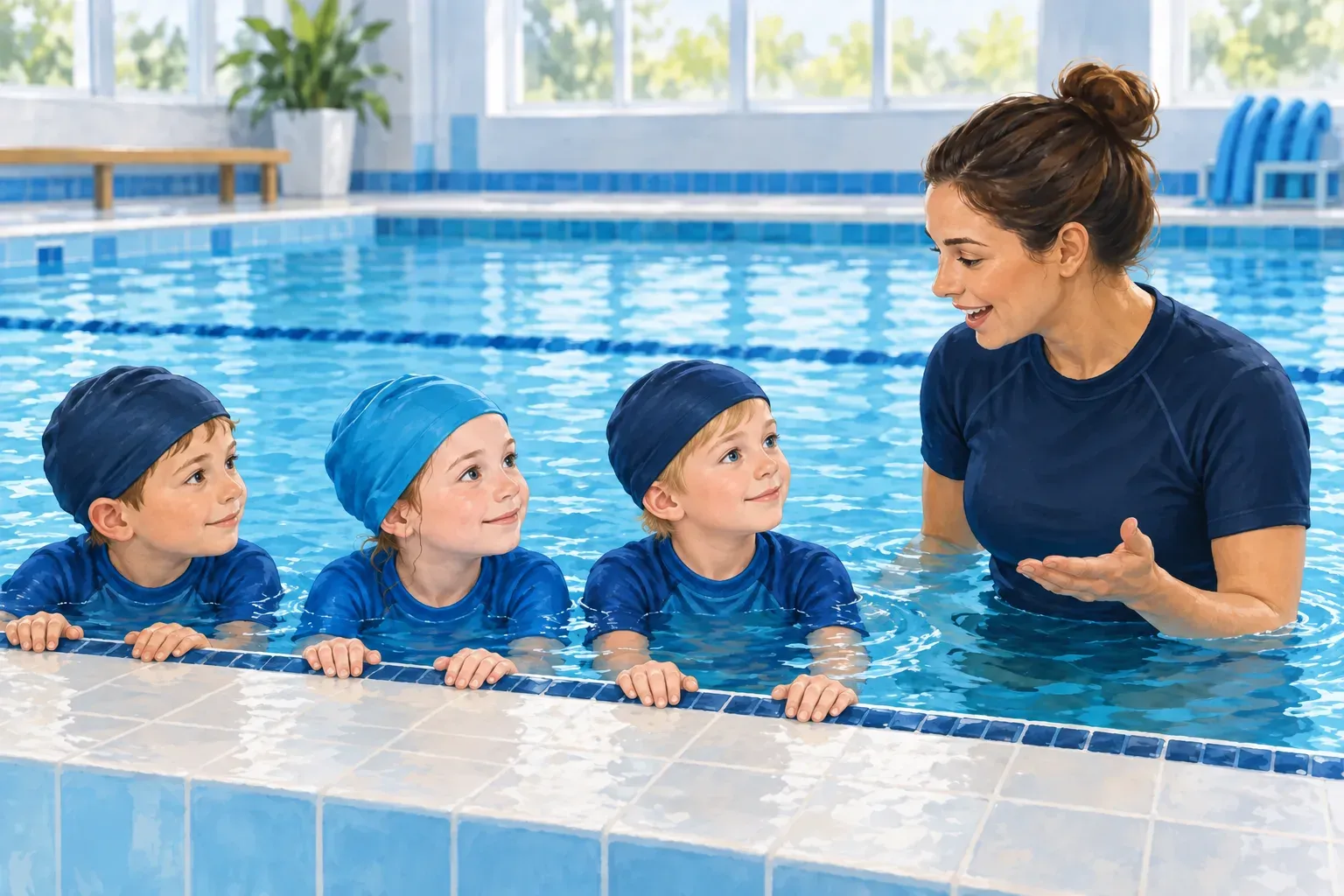
Ask how many children will actually attend at your chosen time, how many teaching staff will work with them and how classes are formed. Children of the same age may have very different experience. Find out how starting ability is assessed and what happens if activities are too easy or difficult. Ask whether another group can be considered and how that decision would be discussed.
Avoid choosing by a supposedly ideal number alone. Consider ability, activities, pool space and supervision together. If your child needs additional explanations, describe that beforehand and discuss what support is realistically available. If observation is permitted from a designated area, watch how attention is shared and what children do while waiting. A small class does not automatically answer these questions. Compare the same details across providers.
Notice how the teacher communicates with your child
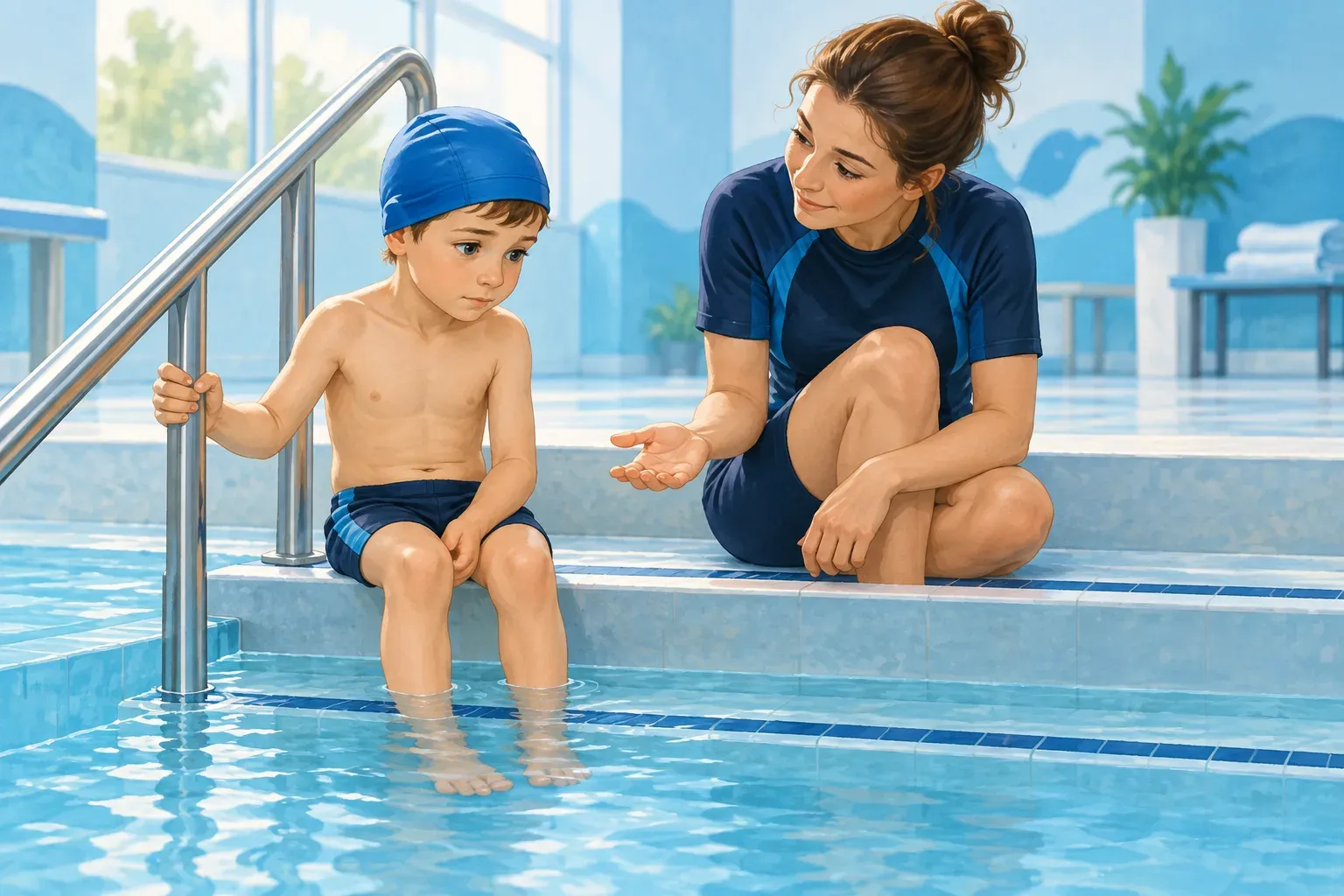
During an introductory conversation, notice whether the teacher addresses your child, allows time for an answer and uses understandable language. Ask what happens when a child refuses an activity or becomes frightened. Swim England’s guidance on good lessons states that children should not be forced into activities. You could ask: “What would you suggest if my child did not want to put their face in the water?”
Clear safety rules can coexist with respectful communication. Distinguish a firm instruction to stop something dangerous from repeated shaming or comparisons with other children. If your child describes an upsetting experience, invite them to explain what happened in their own words and discuss the specific situation with the responsible person. Consider whether your child understands instructions and knows they can mention a difficulty.
Ask about the learning plan and progress updates
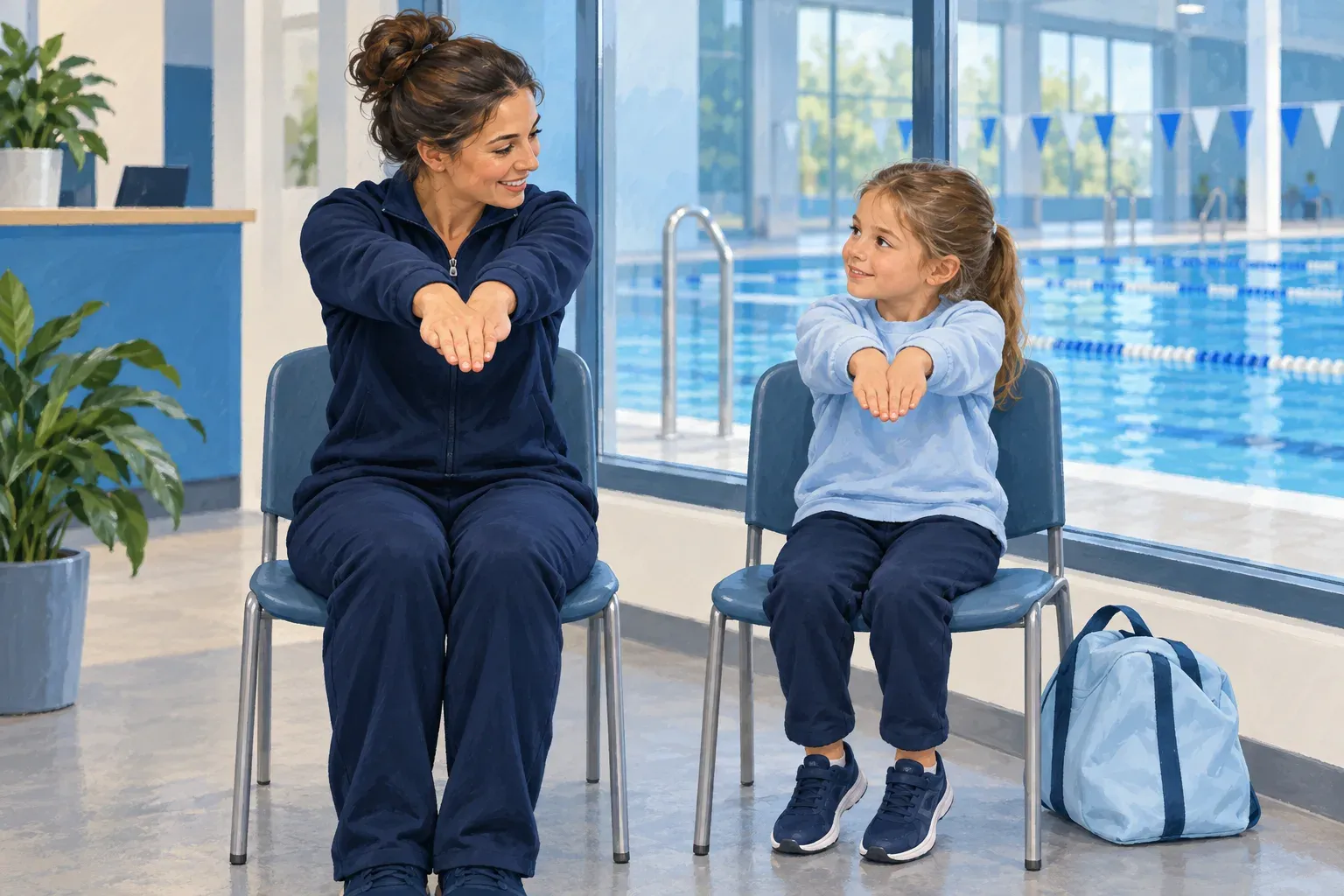
Ask which foundational abilities the teacher will introduce and how they decide when to move to more complex activities. The LTU Aquatics “Mokausi plaukti” programme includes getting used to water, breathing, floating, movement and safe behaviour. This example shows why lessons can be assessed more broadly than by one distance swum. Providers may use different programmes.
Agree how you will receive information about your child. Can you arrange a brief conversation, or is a written assessment available? Useful feedback identifies specific achievements and the next learning step. For example, ask which activities your child performs independently and which still require help. Be cautious about a precise promise to teach swimming within a fixed number of lessons before the teacher knows the learner. An explanation of the assessment process is more useful than an attractive deadline.
Use reviews, observation and practical arrangements
Recommendations from other parents can help create a shortlist. Look for specific details about age, starting ability, communication and organisation. One family may value a competitive pathway, while another wants patient teaching for a beginner. Ask what worked for the person recommending a teacher and compare that with your needs.
The American Academy of Pediatrics suggests asking to observe a class to help assess suitability. Arrange this with the provider and follow pool rules. Before paying, check missed-lesson arrangements, substitute teachers and cancellation terms. Consider the journey too: can you arrive on time, and does the timetable fit school and family routines? Clear practical agreements leave more attention available for learning once lessons begin.
Choosing children’s swimming lessons in Klaipėda
When looking for a swimming teacher in Klaipėda, compare the answers about your child alongside the location. By the end of the conversation, you should understand which class is suggested, why it fits, who will teach and how future learning will be discussed. If answers remain vague, ask for clarification in writing.
Fedo Physique offers lessons for children aged four and over at Klaipėdos baseinas, Dubysos g. 12. Find current times, prices and registration details on the children’s swimming lessons page. When contacting the team, share your child's age, experience and main question. This allows a discussion of suitability and individual circumstances. After the first meetings, revisit your criteria: are arrangements clear, is your child heard and do you know what they are learning?
Frequently asked questions
Do sporting titles guarantee good swimming lessons for children?
Titles show sporting experience. Ask separately about qualifications, teaching beginners and communication. Consider how the teacher explains your own child’s learning needs.
Can I ask to see evidence of a swimming teacher’s qualifications?
Ask for the qualification, document name and issuing organisation. If anything is unclear, request an explanation of what it demonstrates and how you can verify it.
Should I choose the swimming teacher my friends recommend?
Treat a recommendation as a starting point. Find out the other child’s age and experience, then discuss your own child’s needs. The same format may not suit both families.
What should I ask about a substitute swimming teacher?
Ask how parents are notified and how relevant information about the class reaches the substitute. Explain any agreed change to your child in advance.
Should we change teachers after one disappointing lesson?
Clarify the reason and speak to the teacher. Address safety or humiliating behaviour immediately; an ordinary disappointment can be discussed while looking for a workable solution.
Can parents watch every swimming lesson?
This depends on the pool and provider’s arrangements. Ask about designated viewing areas and suitable times for conversations so that discussions do not interrupt supervision.
What should I tell the teacher about additional support needs?
Describe the support your child needs and any relevant recommendations you have. Ask about experience and adaptations; do not assume that every class can provide the required support.
Sources
This article draws on the following guidance and publications.