Your child's first swimming lesson: how to prepare
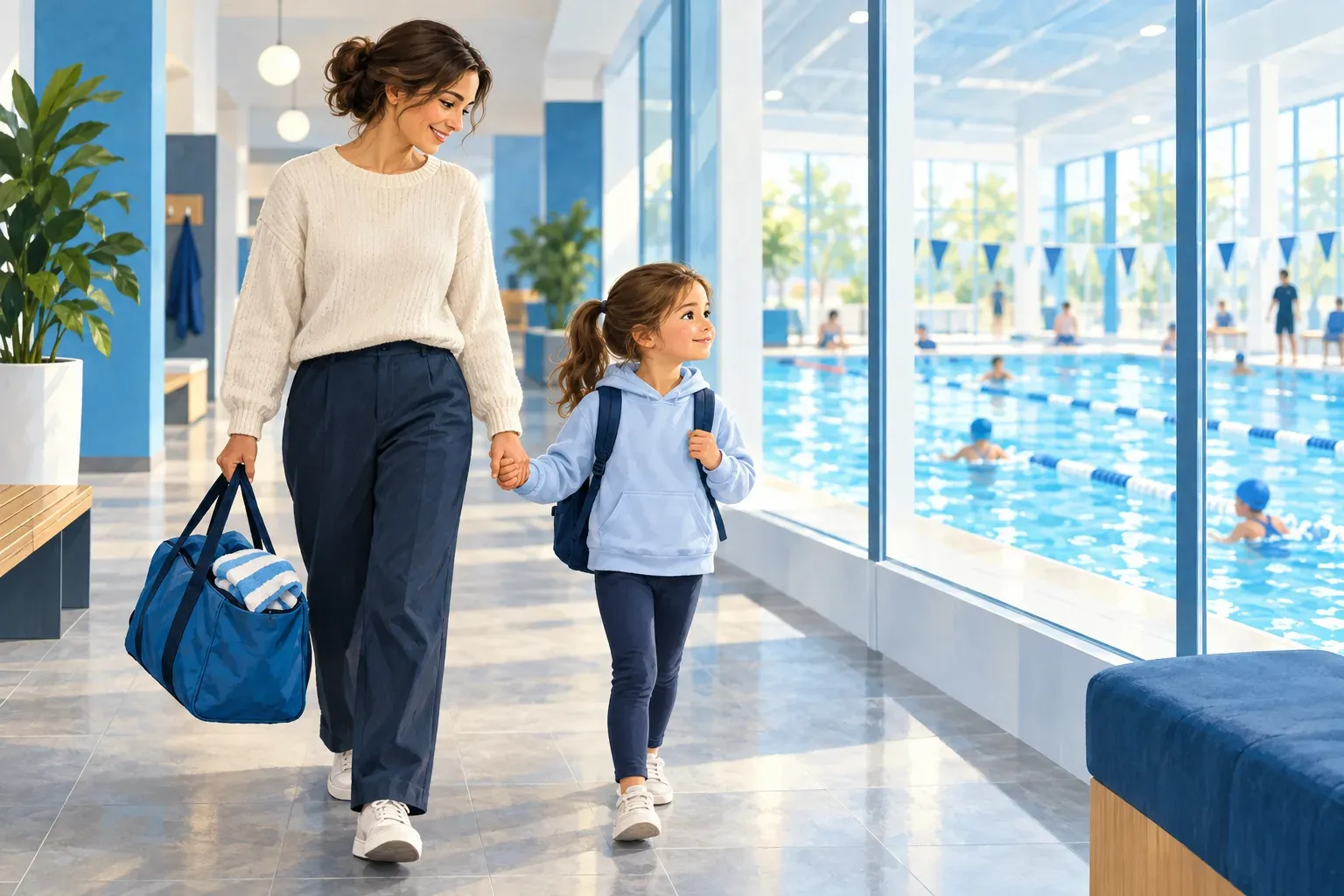
Prepare for your child's first swimming lesson by confirming the arrangements, packing comfortable swimming essentials and explaining what will happen. Children do not need to know how to swim before a beginners' lesson. Arriving calmly, meeting the teacher and understanding who looks after your child throughout the visit matter more than demonstrating skills beforehand.
What to check before the first swimming lesson
When booking, explain your child's age and previous experience in water. One non-swimmer may happily play in a pool with an adult; another may never have visited. Mention whether showers are familiar, how they find new groups and any upsetting experiences in water. These details are more useful than simply describing a child as shy.
Confirm the lesson time, meeting point and recommended arrival time. Ask who helps with changing, where parents wait and whom to contact if delayed. Arrangements differ between pools. Discuss any help your child needs with communication, finding their way or following instructions. Swim England's preparation guidance also advises sharing medical conditions, injuries and individual needs beforehand. Tell the teacher about any restrictions your doctor has advised before the session starts.
Explain the visit in simple, familiar steps
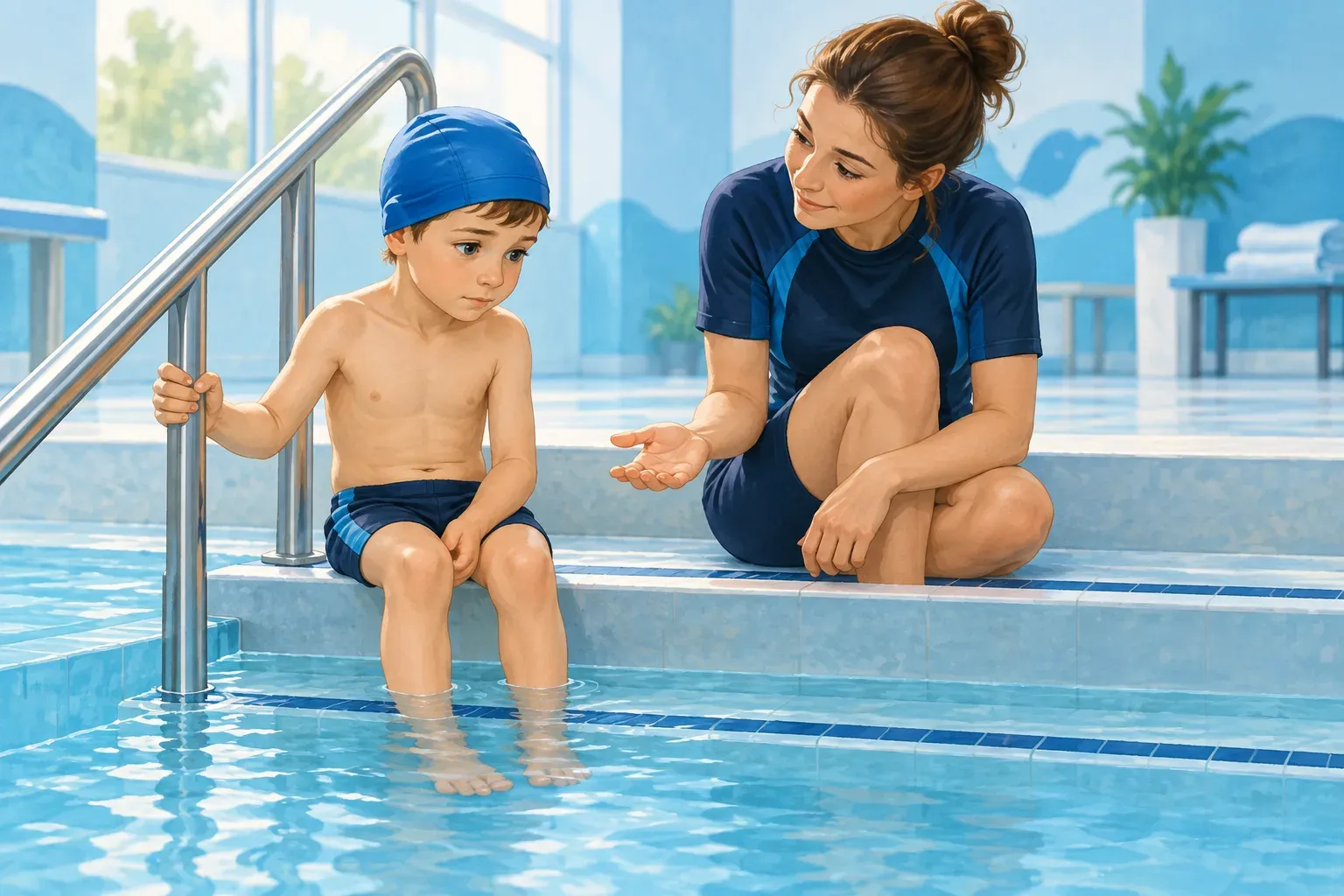
Describe the sequence: arrive, change, meet the teacher and reunite afterwards. Stick to confirmed arrangements. Do not promise to join your child in the water before checking the lesson format. Instead of saying everything will be easy, explain that they will learn gradually and can ask for help. This leaves room to admit that something feels difficult.
Show them their swimming cap, try on swimwear and choose a towel together. If possible, visit the entrance and permitted visitor areas beforehand; the surroundings and sounds may be as unfamiliar as the water. There is no need for a swimming test or breath-holding practice at home. Try rehearsing how to tell the teacher they need the toilet or did not understand an instruction. The aim is easier communication, without suggesting they should already know how to swim.
What to pack for your child's first swimming lesson
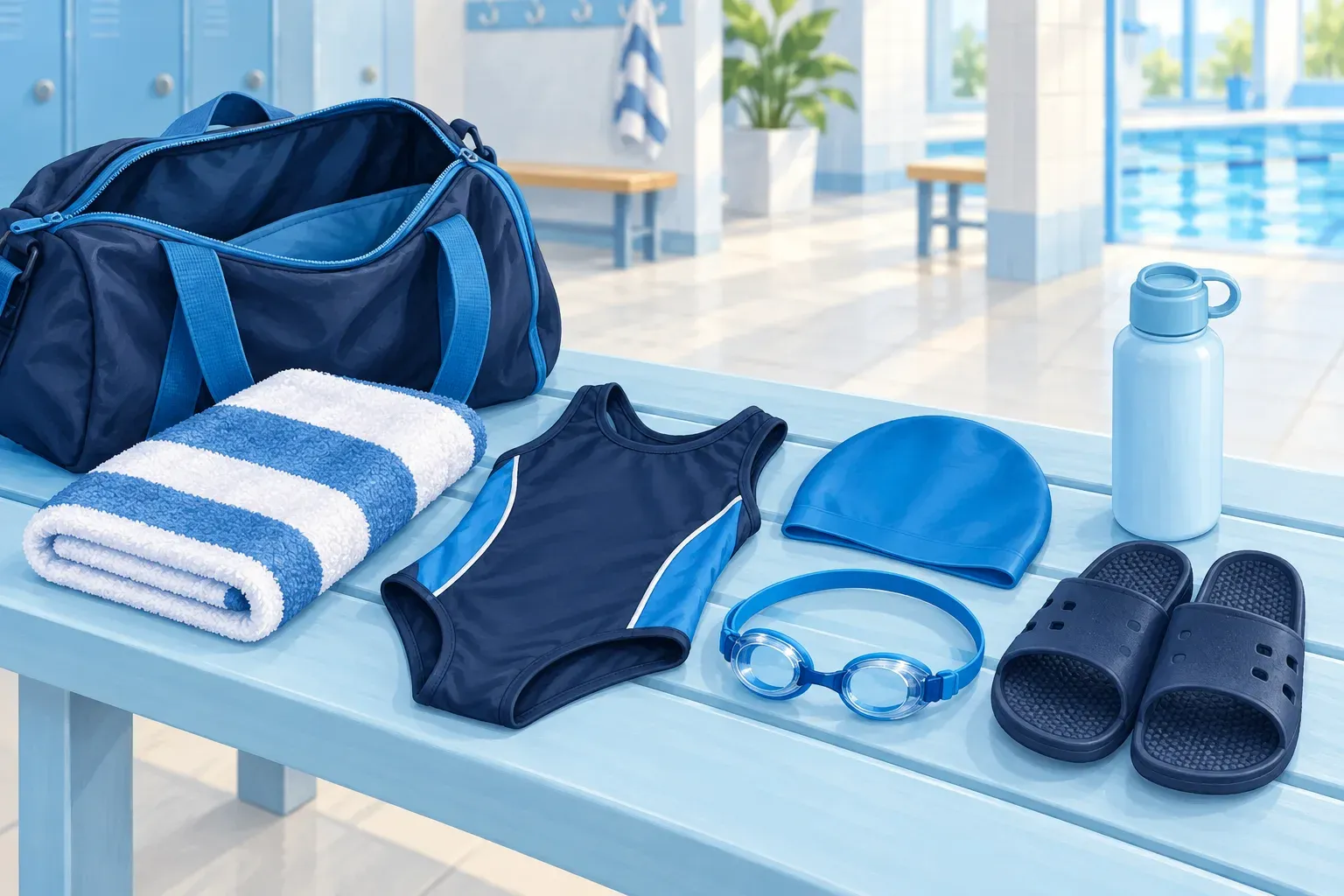
Pack together so your child recognises their belongings. Swim England's first-lesson checklist provides a starting point, but confirm clothing and equipment requirements with your lesson provider. Comfortable essentials that fit are usually enough initially; avoid buying a collection of training equipment in advance.
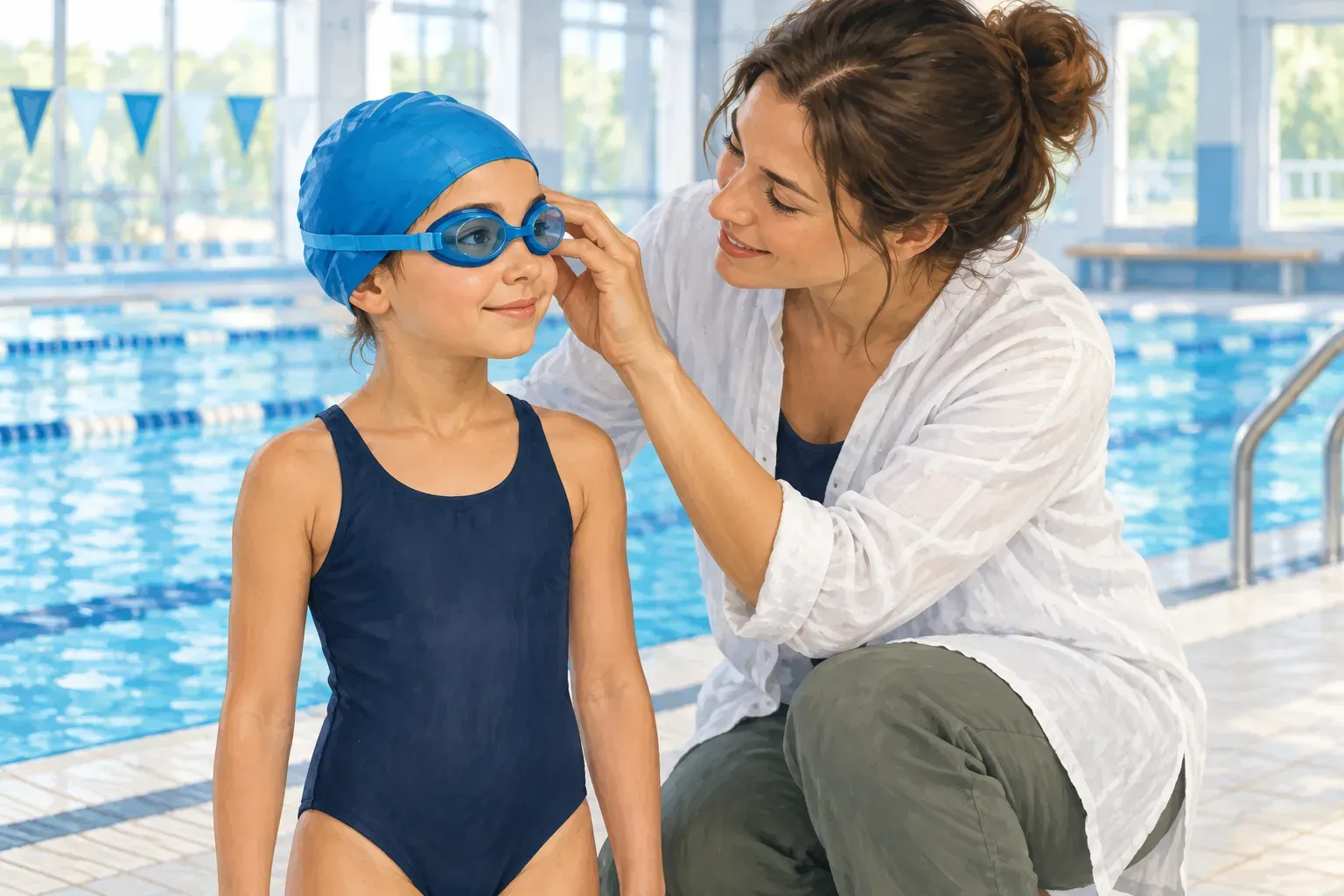
Choose clothes that are easy to put on after showering. Label the cap, goggles case and towel, since other children may have similar items. Check that your child can open their bag and locate what they need, especially if another adult will help them change.
- Comfortable swimwear and suitable pool footwear.
- A towel, shower toiletries, clean underwear and easy clothing.
- A swimming cap and goggles as advised by the provider.
- A bag for wet items and a water bottle.
- A hair tie if needed; check the pool's locker arrangements.
Leave time for everyday routines on lesson day
Avoid planning to arrive at the last minute. Travel, changing, using the toilet and showering take time, particularly somewhere unfamiliar. A packed bag and a checked route mean less rushing and more attention for your child. For lessons after school or nursery, allow a calm transition between activities.
Keep to familiar meal routines, offer a drink and avoid experimenting with new foods on the first day. Allow time for the toilet and shower before entering the water. CDC guidance recommends showering before swimming, avoiding swallowing pool water and staying out when you have diarrhoea. These habits protect everyone using the pool. If your child feels unwell, consider their condition first and contact the provider about attendance arrangements. Having booked the lesson is not a reason to attend regardless of how they feel.
Arrival, changing and handing over to the teacher
On arrival, make sure you have found the correct group and teacher. Show your child where you will meet afterwards. If someone else will collect them, agree beforehand how to communicate that arrangement. These details may seem obvious to an adult, but help a new learner understand the whole visit.
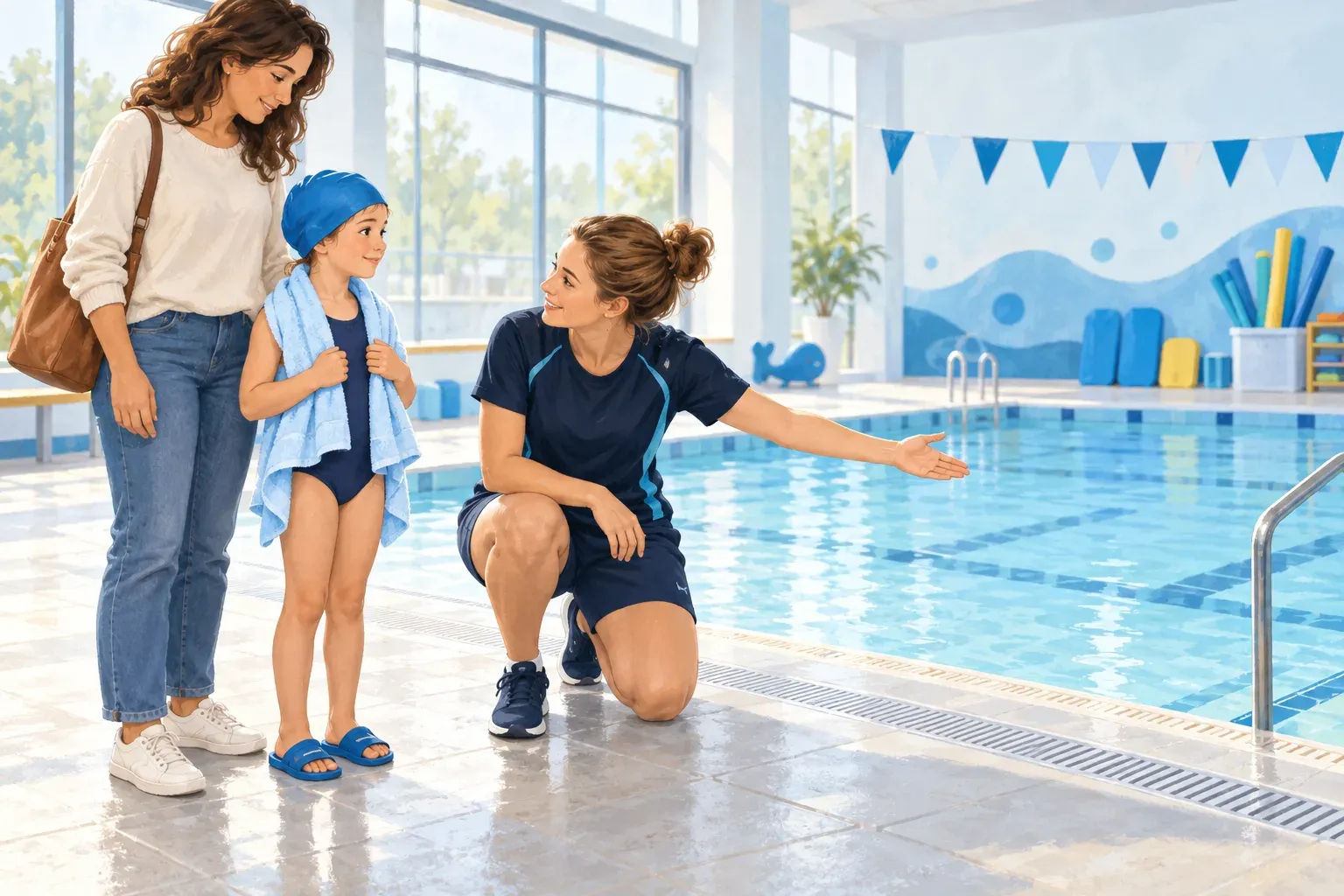
Establish when the teacher takes responsibility for supervision and how children return to their accompanying adults. Entering a changing room or reaching poolside does not itself mean a responsible person has taken over. Stay responsible for your child until the agreed handover. If anything is unclear, remain together and ask staff. Also check how toilet breaks or requests for help are managed during lessons. The first few minutes should not involve guessing who is looking after your child.
What might happen during the first swimming lesson?
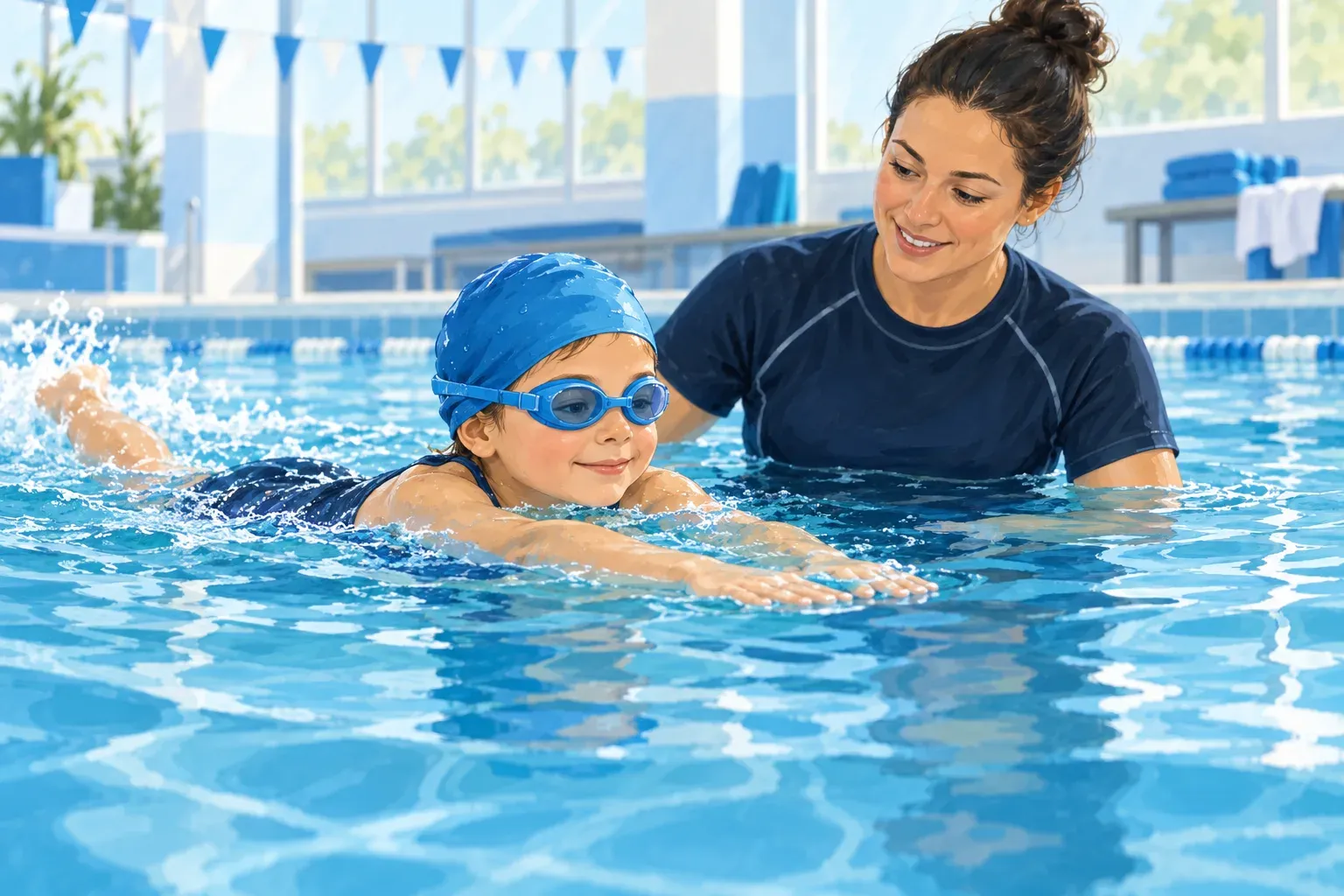
The first session may involve introductions, understanding rules and allowing the teacher to observe existing skills. Depending on the group and readiness, activities might include simple movement, breathing or floating tasks with appropriate support. These are possible examples, not a promised sequence for every first lesson. The teacher chooses suitable tasks and difficulty.
Avoid expecting a set distance or everything another child can do. Understanding a rule, asking a question confidently or participating calmly can be worthwhile achievements. The American Academy of Pediatrics recommends looking for gradual skill development and feedback from instructors. One session does not establish a child's overall learning pace. If tasks seem too easy or difficult, discuss whether the group fits afterwards, instead of judging solely by the number of pool lengths completed.
Support your child and follow supervision arrangements
If viewing is permitted, use the designated area and let the teacher communicate with the group. Two sets of instructions are difficult to follow. A reassuring expression can be more helpful than repeated directions from poolside. If your child clearly becomes distressed or requests help, alert the teacher through the agreed approach; there is no need to ignore them simply to complete a task.
Supervision matters before and after lessons too. The American Red Cross calls for constant, attentive supervision around water; lifeguards and inflatable aids do not replace it. Neither do swimming lessons. Explain that children enter the water only with permission from the responsible adult and walk calmly around the pool. These rules still apply when a successful lesson leaves them feeling especially confident.
Talk about the experience and prepare for next time
After showering and changing, ask what was interesting, surprising or needed help. Avoid requesting a detailed report of every activity. Recognise something specific, such as telling the teacher that goggles felt tight. If something was difficult, note one question to discuss. This helps separate practical inconvenience from concerns about learning.
For Fedo Physique children's swimming lessons in Klaipėda, check current groups, prices and timetables on the service page. Lessons welcome children aged four and over at Klaipėdos baseinas, Dubysos g. 12. Confirm your arrival and changing arrangements before visiting. Preparing for the next session may need just one practical adjustment: leaving earlier, organising the bag differently or reminding your child where you will meet.
Frequently asked questions
Must I buy goggles before the first lesson?
Ask the provider first, as their use depends on the lesson and teacher's instructions. If required, a comfortable fit matters more than choosing the most expensive pair.
How early should we arrive for the first swimming lesson?
Confirm the recommended arrival time when booking. Allow time to find your way, change, use the toilet and shower; these steps may take longer on your first visit.
Do parents need to change and join their child in the water?
That depends on the lesson format. Check whether an accompanying adult participates, where they wait and what clothing they need before arriving.
What happens if we forget a cap or towel?
Tell staff before the session and ask what options are available. Do not assume the pool will always have equipment to lend or sell.
Can my child bring their own inflatable armbands?
Agree which learning aids to use with the teacher. Avoid buying or choosing buoyancy equipment independently beforehand; inflatable armbands never replace supervision by a responsible adult.
What if my child refuses to get changed on the first day?
Calmly explore whether unfamiliar surroundings, privacy or uncomfortable clothing are the problem. Tell the teacher and discuss a suitable response without pressuring your child to hurry.
Should we practise at home after the first lesson?
Discussing the experience and preparing for next time are enough. Agree technical practice with the teacher; independent breath-holding or submersion exercises are not necessary preparation.
Sources
This article draws on the following guidance and publications.