Swimming goggles for children: how to choose
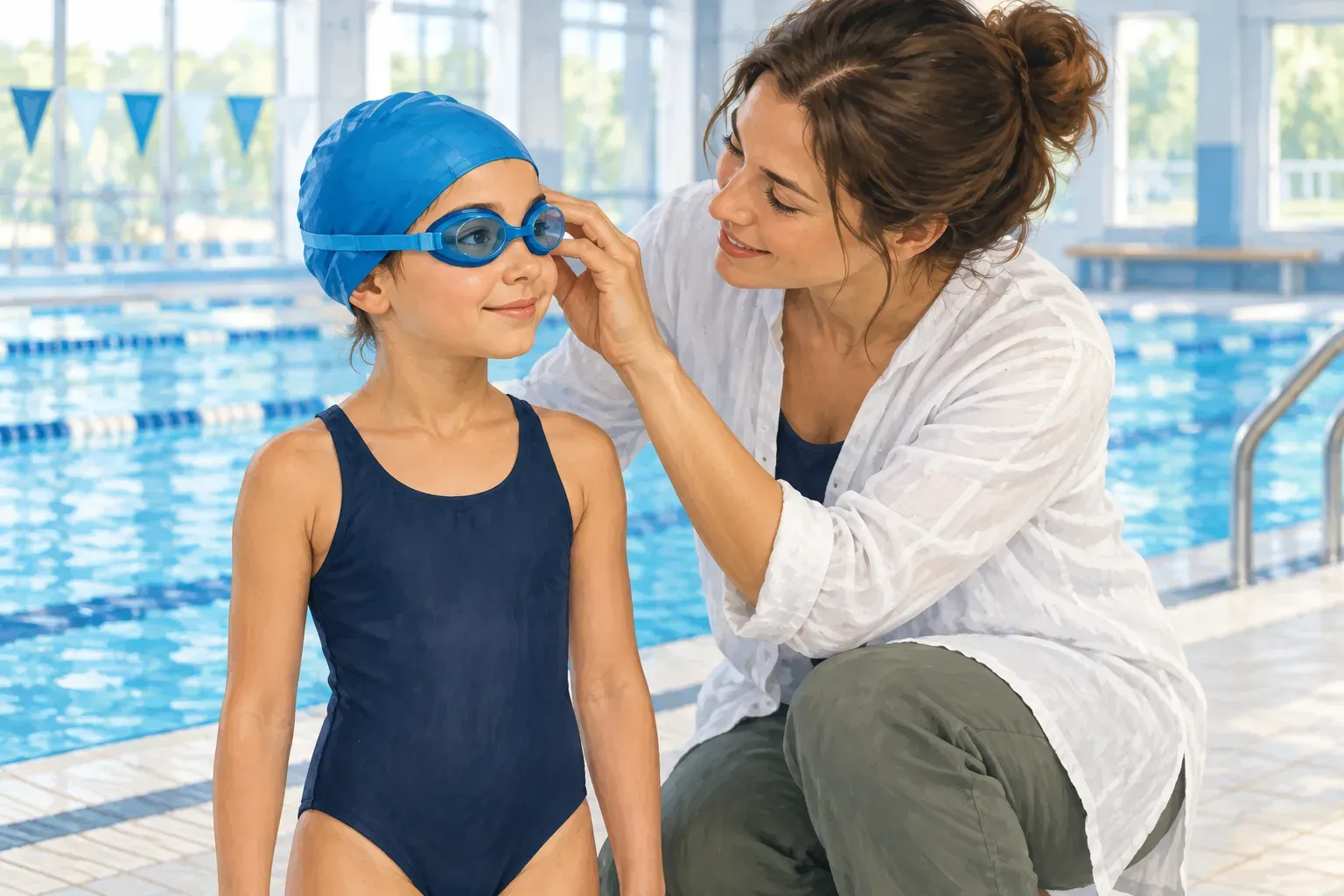
Choose children's swimming goggles by checking their fit, comfort and visibility. An age label and favourite colour can narrow your options, but trying them on gives a better answer. For pool lessons, look for an easily adjustable pair your child can learn to put on and remove. Before buying their first pair, ask the swimming teacher about using goggles in lessons.
Does my child need goggles for swimming lessons?
Goggles may help children feel more comfortable putting their face in the water. Their use depends on lesson goals and the teacher's approach. Swim England recommends discussing this with the teacher and gradually building confidence in water without goggles, too.
Consider whether your child is just starting or already swimming regularly. Beginners need something comfortable and straightforward. Constant adjustments deserve attention rather than being accepted as an inevitable part of learning. Ask what bothers them: water leaking in, pressure, foggy lenses or simply the feeling on their face.
You need not buy several pairs in advance. Start with one suitable pair and keep the instructions. These explain what you can adjust and how to care for that particular lens coating.
Choose the size for your child's face
The manufacturer's age range is a starting point. The Arena goggles guide, for example, separates younger children and schoolchildren into size groups but acknowledges that some older children fit a larger frame better. Children of the same age can have different face shapes.
Let your child calmly compare several models. Check where the soft edges sit, whether the nose bridge rubs and whether the frame looks too wide. Their feedback matters more than the product photograph. Asking where something presses is often more useful than simply asking whether they like it.
Avoid buying oversized goggles to last several years: they should fit now. When shopping online, check the seller's fitting and return conditions before paying. Rules may differ for opened products or items already used in water.
Check the seal and adjust the strap
The seal principally depends on how the goggle edges fit; the strap holds them in place. Swim England's selection advice describes a brief, gentle seal without excessive pressure. Tightening the strap should not compensate for an unsuitable frame shape.
If the product instructions allow, gently position the goggles around the eyes without the strap. Do not press hard or try to make them stay attached for a long time. Fit the strap as instructed, then ask about comfort. Try the adjuster yourself: can you loosen it easily and understand how it works?
Before a lesson, check the following. This helps distinguish poor sizing from a folded seal or incorrectly positioned strap.
- No hair or swimming-cap edge is trapped beneath the seal.
- The strap is untwisted, goggles sit straight and your child reports no uncomfortable pressure.
- Your child knows to tell the teacher if the goggles become uncomfortable.
Which lenses suit indoor swimming lessons?
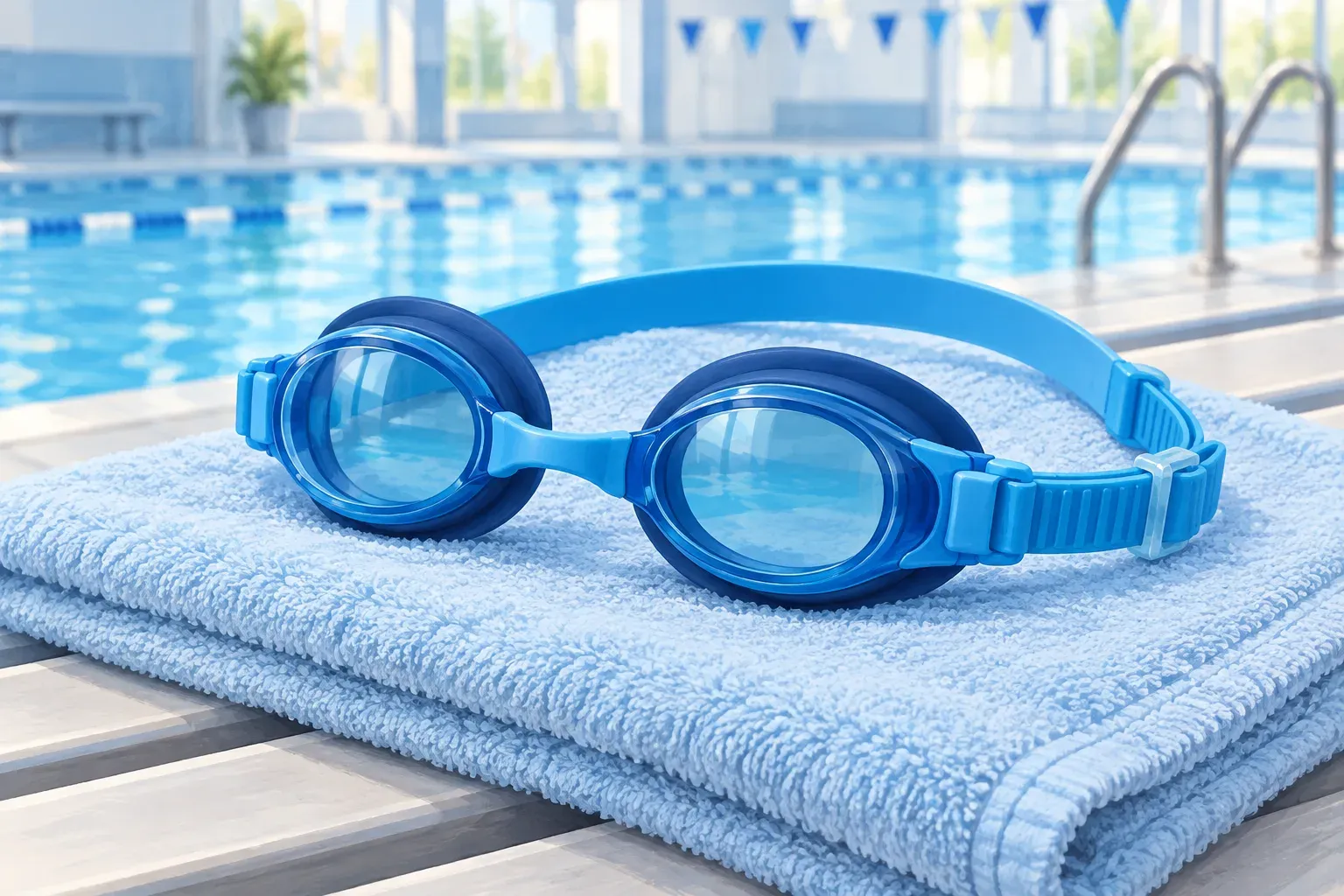
Match lenses to the lighting, rather than just the swimsuit. The Speedo goggles guide distinguishes clear, tinted and mirrored lenses for different conditions. For an indoor pool without especially bright lighting, start by considering clear or lightly tinted lenses.
Ask your child whether their surroundings look clear or too dark, and whether looking ahead and sideways feels comfortable. A mirrored finish does not automatically make goggles better. For outdoor use, check the product's stated ultraviolet protection: a dark tint alone does not establish this.
If your child needs vision correction, discuss suitable swimming goggles with an eye-care professional. Do not guess the prescription when shopping. Tell the swimming teacher if your child struggles to see demonstrations or poolside landmarks.
Regular goggles or a children's swimming mask?
Shops offer smaller goggles and broader swimming masks. Here, we mean an eye-only swimming mask that leaves the nose uncovered, rather than a diving mask. Bigger is not automatically more comfortable: check where the edges touch and how easily your child can position it.
Let your child describe the difference between two options. Some prefer a smaller frame; others like a broader one. If both fit, let them choose the colour. They can contribute while you first check comfort, visibility and ease of use.
A racing label is not a requirement for first lessons. Set a budget and compare what you are paying for: adjustment, lens type or an included case. More serious interest in swimming does not by itself call for expensive goggles. Link any upgrade to an identifiable need.
Why do goggles leak or fog up?
Ask your child to describe the problem precisely. Droplets on one side are different from a misty view through both lenses. After the lesson, inspect the goggles and establish whether trouble began immediately or during a particular exercise. This helps the teacher more than simply hearing that the goggles are bad.
Condensation can cause fogging. Speedo's care guidance recommends protecting the anti-fog coating and following the instructions for the model. Avoid rubbing the inside with a towel or experimenting with household products. Use specialist treatments only as their instructions and the goggles' manufacturer direct.
If leaking continues, reassess the size and condition. Repeatedly tightening the strap is not a good response to discomfort. Before buying again, identify what failed: the nose bridge, width, adjustment or lenses.
Teach your child to handle goggles safely
Practise putting goggles on calmly in a dry place. Read the instructions together and demonstrate how to loosen the strap. The SEAC user instructions emphasise careful removal and checking the product's condition. Do not stretch goggles away from the face and release the tensioned strap.
Let your child practise at their own pace without enduring uncomfortable pressure. Agree a simple phrase: ‘My goggles are bothering me; I need help.’ During lessons, they should ask the teacher and follow instructions instead of trying to solve problems independently in the water.
Comfortable goggles do not prevent drowning. The American Academy of Pediatrics stresses that lessons never replace constant adult supervision. Feeling braver with new equipment does not change water-safety rules.
Care for goggles and prepare for the next lesson
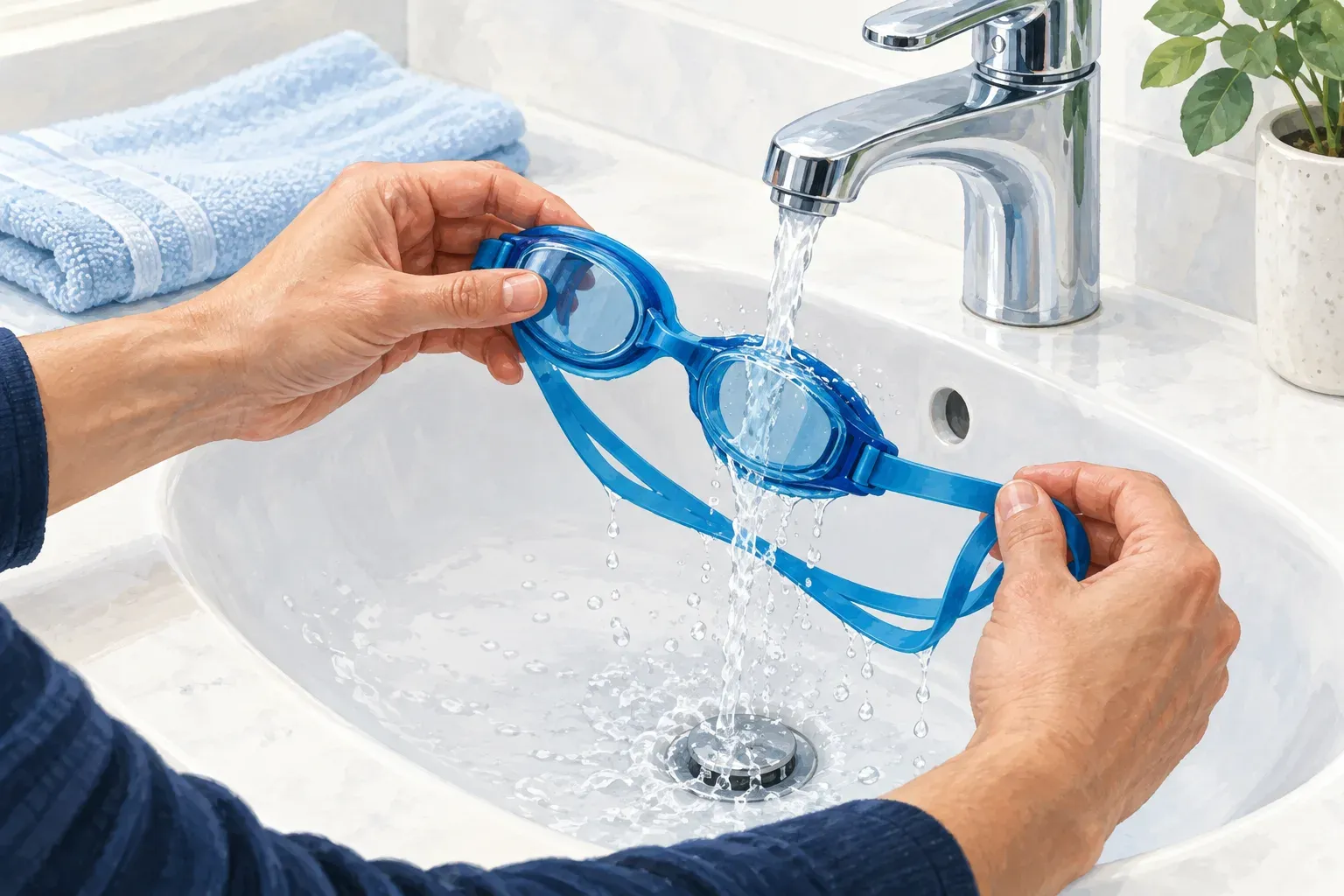
Establish a routine: following the manufacturer's instructions, rinse goggles in fresh water, allow them to air-dry and store them in a case. Avoid leaving them crushed among wet clothes. Your child can organise the case while an adult checks for damage and checks the adjuster.
Red or stinging eyes are not necessarily a sign of unsuitable goggles. CDC explains that chloramines can irritate eyes around pools and recommends reporting irritation to staff. Goggles do not replace showering before swimming or proper pool-water management.
Before visiting, read about children's swimming lessons in Klaipėda and discuss equipment requirements. Fedo Physique lessons welcome children aged four and over at Klaipėdos baseinas, Dubysos g. 12. Suitable goggles help keep attention on learning rather than equipment.
Frequently asked questions
Can a four-year-old wear goggles labelled for six-year-olds?
An age label alone is insufficient. Follow the manufacturer's guidance, then assess fit and comfort. If the frame is too wide or the strap needs excessive tightening, try another model.
Do marks around the eyes mean goggles are too small?
Marks alone cannot establish the size. Check strap tension, frame shape and how your child feels. Pain or persistent uncomfortable pressure should not be accepted as a normal part of swimming.
Should the goggle strap go over or under a swimming cap?
Follow the goggles' instructions and the teacher's advice. The important points are a comfortable, stable strap and keeping the cap's edge out from between the seal and the skin.
Are mirrored goggles better for children?
Not automatically. Suitability depends on lighting and location. For indoor lessons, check that your child sees clearly and that the view is not too dark.
Can I wipe foggy goggles with a towel?
Avoid rubbing the inner lenses with a towel unless the specific product instructions say otherwise: this can damage the coating. Choose care methods and products according to the manufacturer's advice.
When does my child need replacement goggles?
Replace them when they no longer fit, are damaged, impair visibility or cannot be adjusted comfortably. There is no universal replacement interval; assess their actual condition and use.
What if my child forgets their goggles?
Tell the teacher before the lesson. Participation depends on the planned activities and your child's needs. Explain clearly if goggles are necessary for vision or another individual reason.
Sources
This article draws on the following guidance and publications.
- Swim England: wearing goggles in swimming lessons
- Swim England: goggle fit and comfort
- Arena: swimming goggle types and sizes
- Speedo: guide to swimming goggles
- Speedo: caring for swimming goggles
- SEAC: swimming goggles user instructions
- CDC: eye irritation around swimming pools
- American Academy of Pediatrics: lessons and supervision