Child afraid of water: how to help them learn to swim
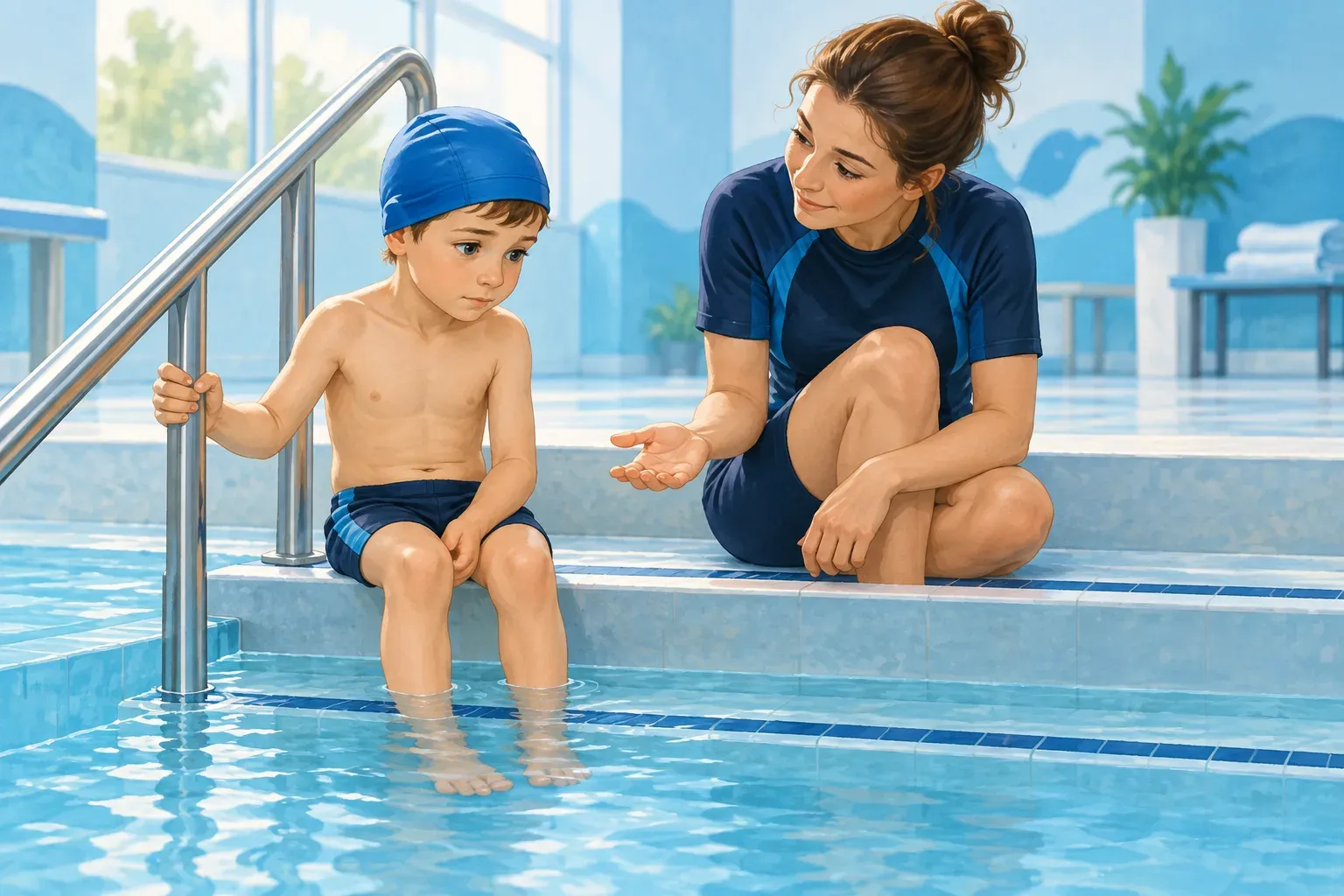
If your child is afraid of water, start with a calm conversation and a small, clear step agreed with their instructor. Forcing them into the pool or unexpectedly submerging them is inappropriate. First, establish what frightens them: water on their face, depth, an unfamiliar adult or a previous scare. You can then discuss a suitable pace for becoming familiar with water. The aim is confidence and learning, with clear safety boundaries.
What does being afraid of water actually mean?
The phrase can describe very different situations. One child happily plays in shallow water but worries about getting their face wet. Another stops at the pool entrance despite enjoying baths. A third wants to swim but fears letting go of support. Before finding a solution, identify the place and action that trigger the fear. The word ‘water’ alone tells the instructor little about the help needed.
Talk at home when there is no rush. Invite your child to draw the pool or finish: ‘It would be easier if…’ Offer younger children concrete alternatives: splashes or an unseen pool floor? There is no correct answer to extract. If they cannot explain, ask which part feels hardest. Note their words and clarify them with the instructor, using observations rather than labels.
Talking about water anxiety without pressure
NHS guidance recommends listening to anxious children, taking concerns seriously and discussing their worries before involving them in stressful situations. Instead of ‘there’s nothing to fear’, try: ‘I can see you’re worried. Let’s tell your instructor what feels difficult.’
Avoid comparisons with siblings or younger swimmers. Promising a present for going underwater also shifts attention away from how your child feels and what they understand. Agree what you will discuss or look at today. Do not promise what you cannot control, such as a face staying dry. Explain that splashes happen and they can tell an adult about worries. A few clear sentences before class are enough; a long talk outside the changing room can become another task. Show that you will listen afterwards too, whatever happens.

What to tell the swimming instructor
Contact the instructor before the lesson, while they are free from supervising the group. Describe what your child comfortably does, what they avoid and any previous scare. Use their actual words where possible. ‘She worries nobody will help her stand up’ is more useful than ‘she’s very sensitive’. Mention any relevant sensory concerns or health circumstances.
Agree a simple plan: one appropriate action to attempt, how it will be explained, how your child can request a pause and when you will review it. Ask whether the group allows enough support for this preparation. Specific arrangements require agreement; do not assume parents can always remain poolside or change lesson formats. Involve your child at a level they understand. They should know what adults agreed, and the instructor should know what the family has promised.
Small steps before more demanding water activities
Swim England’s advice on swimming fears emphasises gradual familiarisation without rushing. For children, the supervising instructor should adapt the step. One starting point might be a quiet conversation near the pool; another, watching a demonstration. These examples are not a compulsory exercise sequence.
Before trying, your child should understand what will happen, where the adult will be and how they will help. Offer a small choice, such as hearing the explanation or watching first. Children should not decide which depth is safe. If the agreed step proves too demanding, reduce it with the instructor. Avoid extra attempts to compensate for a slow start. Leave submersion, breathing and floating exercises to supervised instruction. Rather than copying online drills at home, ask which familiar words you can reinforce between lessons.
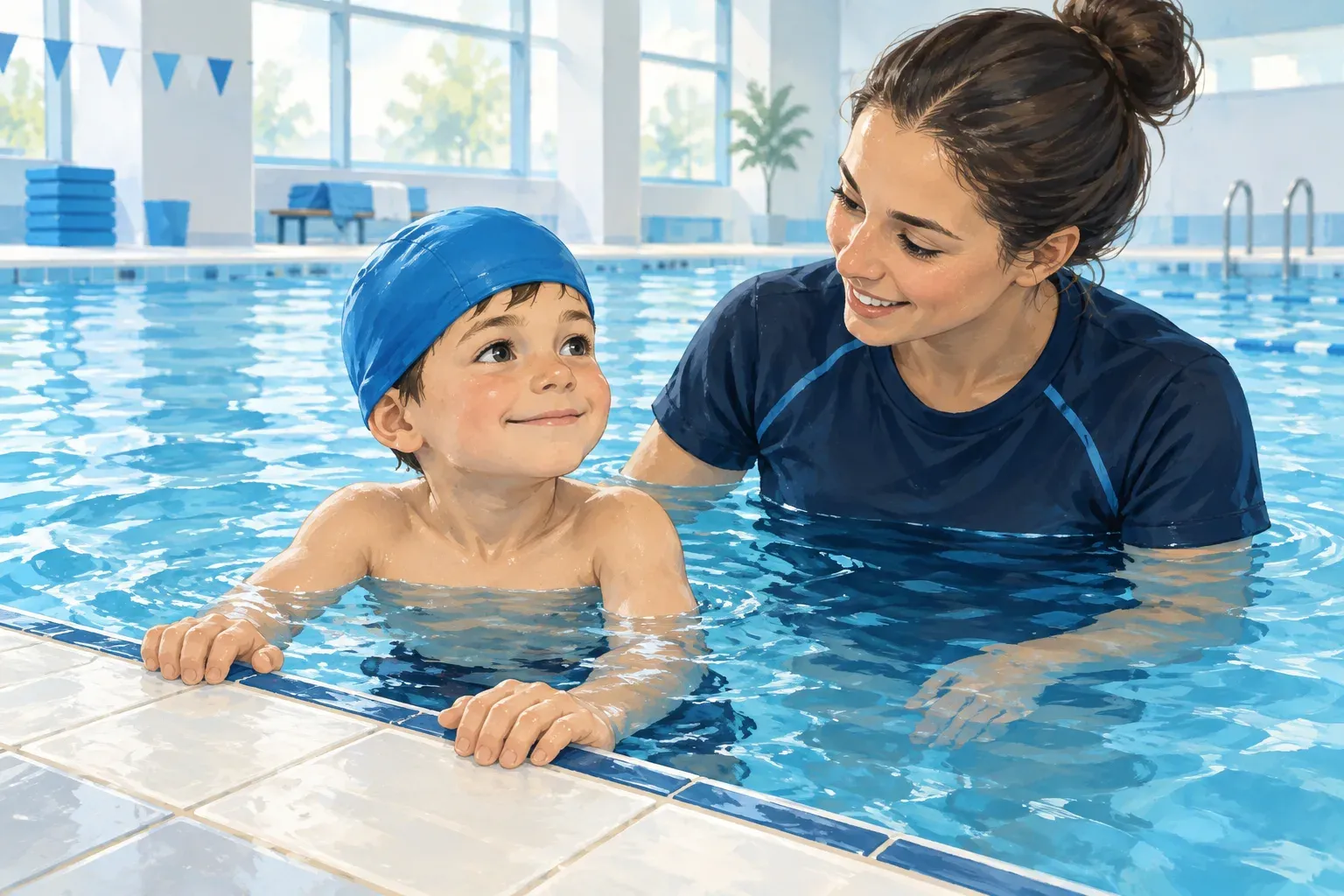
When splashes, noise or an unfamiliar pool feel frightening
Consider the surroundings. Ask whether the shower, echoes, other children’s splashes, a tight cap or misted goggles feel unpleasant. If the difficulty concerns something specific, encouragement to swim more bravely cannot resolve it alone. For example, try existing goggles calmly on dry land and tell the instructor if your child dislikes someone unexpectedly touching their face.
Swim England suggests introducing the pool beforehand and meeting the teacher where possible. Ask about a short visit or another way to see the setting. Establish where you may wait and how the handover works. Sensory observations help planning; they do not establish a diagnosis. If your child has individual needs, discuss adjustments with their instructor and relevant professionals. Share agreements with any relative bringing them next time.
Recognising progress before your child can swim
Choose an observable sign linked to the original fear. Perhaps your child asked the instructor to explain an activity, felt calmer in the agreed place or described the help they wanted. These are useful discussion points even when swimming distance remains unchanged. Ask what the instructor noticed and compare that with your child’s account. Each may notice different aspects of the lesson.
Afterwards, one question is enough: ‘What felt easier today?’ If nothing did, avoid insisting on a positive answer. Decide together what to tell the instructor next time. Set a date to review the plan, without setting a deadline for fear to disappear. Brief notes can prevent one difficult visit overshadowing earlier attempts. Use them to guide adult discussions, rather than making a scorecard or comparisons with other children.
Confidence in the pool does not replace supervision
The American Academy of Pediatrics stresses that lessons provide only one layer of drowning prevention. Adult attention remains essential when confidence improves. During recreational swimming, stay within arm’s reach of children who cannot swim or are weak swimmers.
During family visits, agree who is supervising. The American Red Cross advises constant attention without phones or other distractions, and teaching children to ask permission before approaching water. Familiarity with a pool is no reason to test courage in the sea. Avoid unexpected jumps or challenges involving reaching an adult who moves away. Build trust by keeping agreements and leave the instructor to assess which tasks are appropriate.
When to review the plan or seek extra support
If fear increases, talk before the next lesson. Review whether the step is understandable, the setting suitable and agreed boundaries respected. Persistent, severe anxiety that interferes with everyday life warrants discussion with a family doctor or child psychologist, consistent with NHS guidance on seeking help.
In Klaipėda, discuss your child’s experience before enrolling in Fedo Physique swimming lessons for children aged four and over. Sessions take place at Klaipėdos baseinas, Dubysos g. 12. Explain the situation and ask about available groups and possible adjustments. The first conversation should establish an appropriate next step, without promising how many lessons it will take for the fear to disappear.
Frequently asked questions
Must my child overcome their fear before starting lessons?
Not necessarily. Tell the instructor beforehand and discuss whether the setting and lesson format allow an appropriate starting step for your child.
What if my child cries as soon as we approach the pool?
Stay together in a safe place, listen and contact the instructor. Do not carry a crying child into the water simply to start the lesson on time.
Should my child watch a lesson from the side first?
Watching is one possible familiarisation step. Agree the opportunity, location and supervision with the instructor and pool beforehand; it is not automatically available in every class.
My child only fears getting their face wet. Is that a water phobia?
The concern may relate to a particular sensation. Describe it clearly to the instructor and avoid rushing submersion. You do not need to diagnose a phobia yourself.
Will swimming goggles remove the fear?
Goggles may improve comfort if water around the eyes is worrying, but cannot address every cause of fear. Suitable fit and explaining the concern to the instructor matter.
What should we do after a previous frightening incident in water?
Tell the instructor what happened and do not recreate the incident. If memories cause significant distress or disrupt daily life, consult a family doctor or child psychologist.
Can parents help if they cannot swim themselves?
Yes: listen, share accurate information with the instructor and follow safety rules. Do not attempt to teach in the water yourself; seek instruction for your own skills too.
Sources
This article draws on the following guidance and publications.