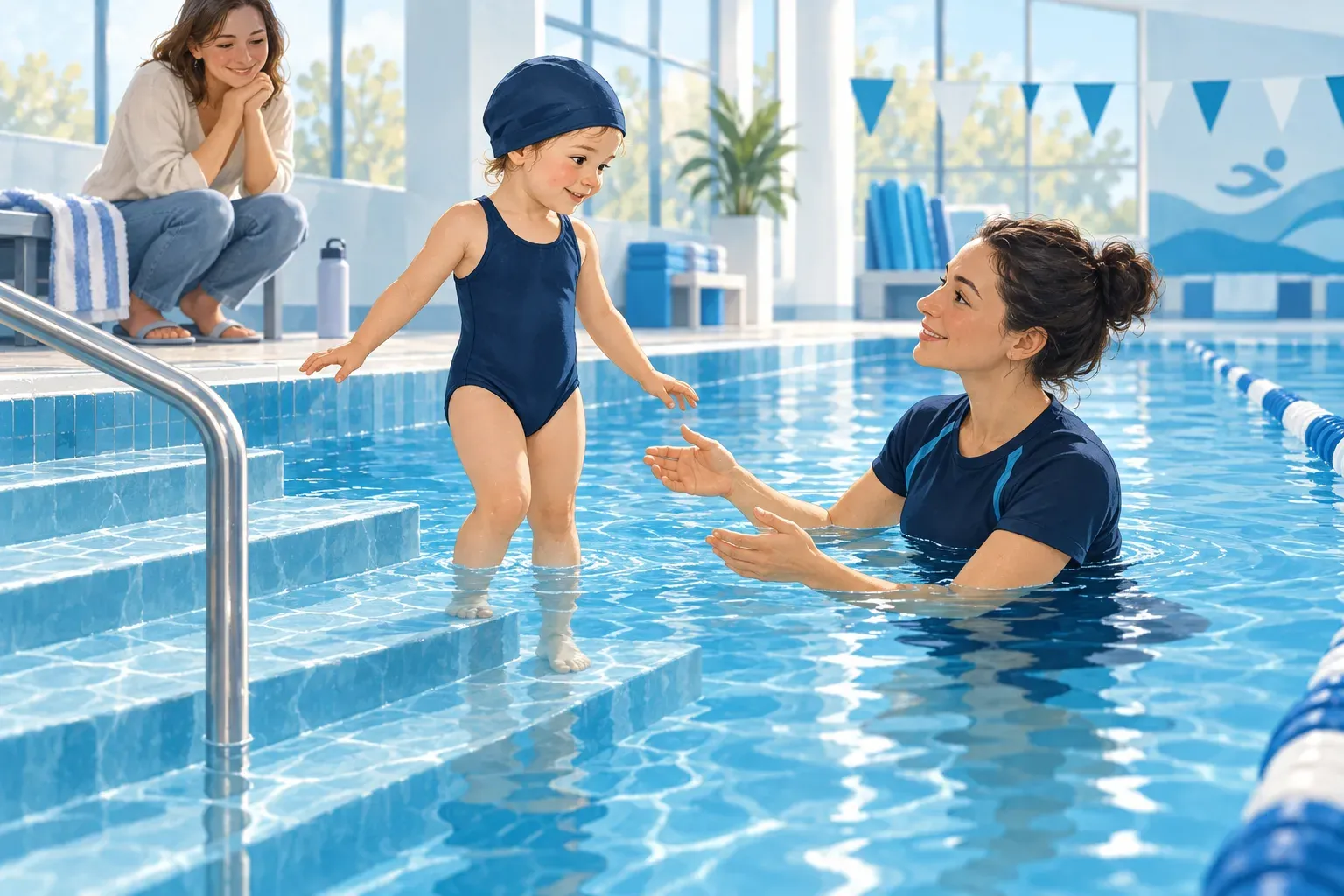
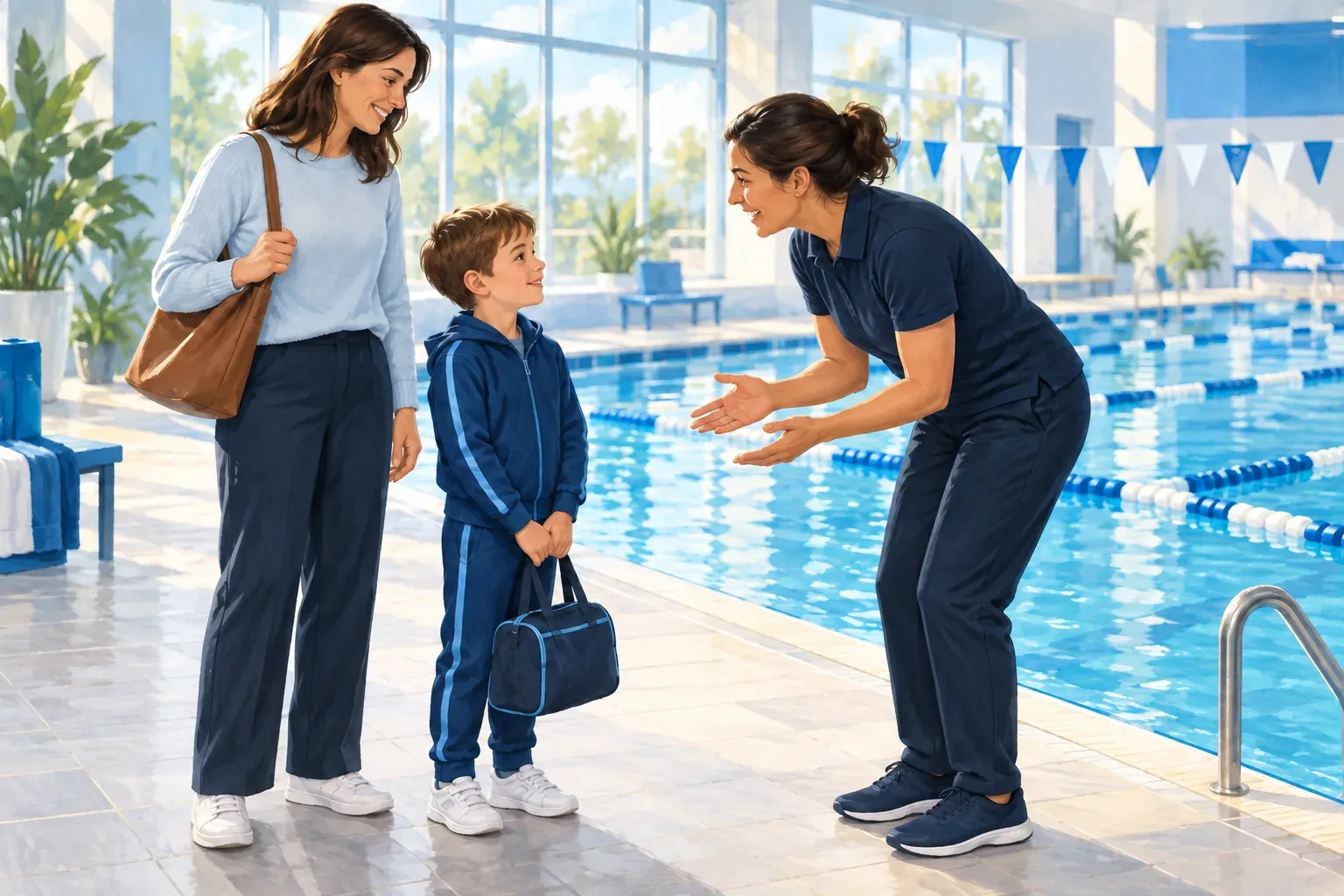
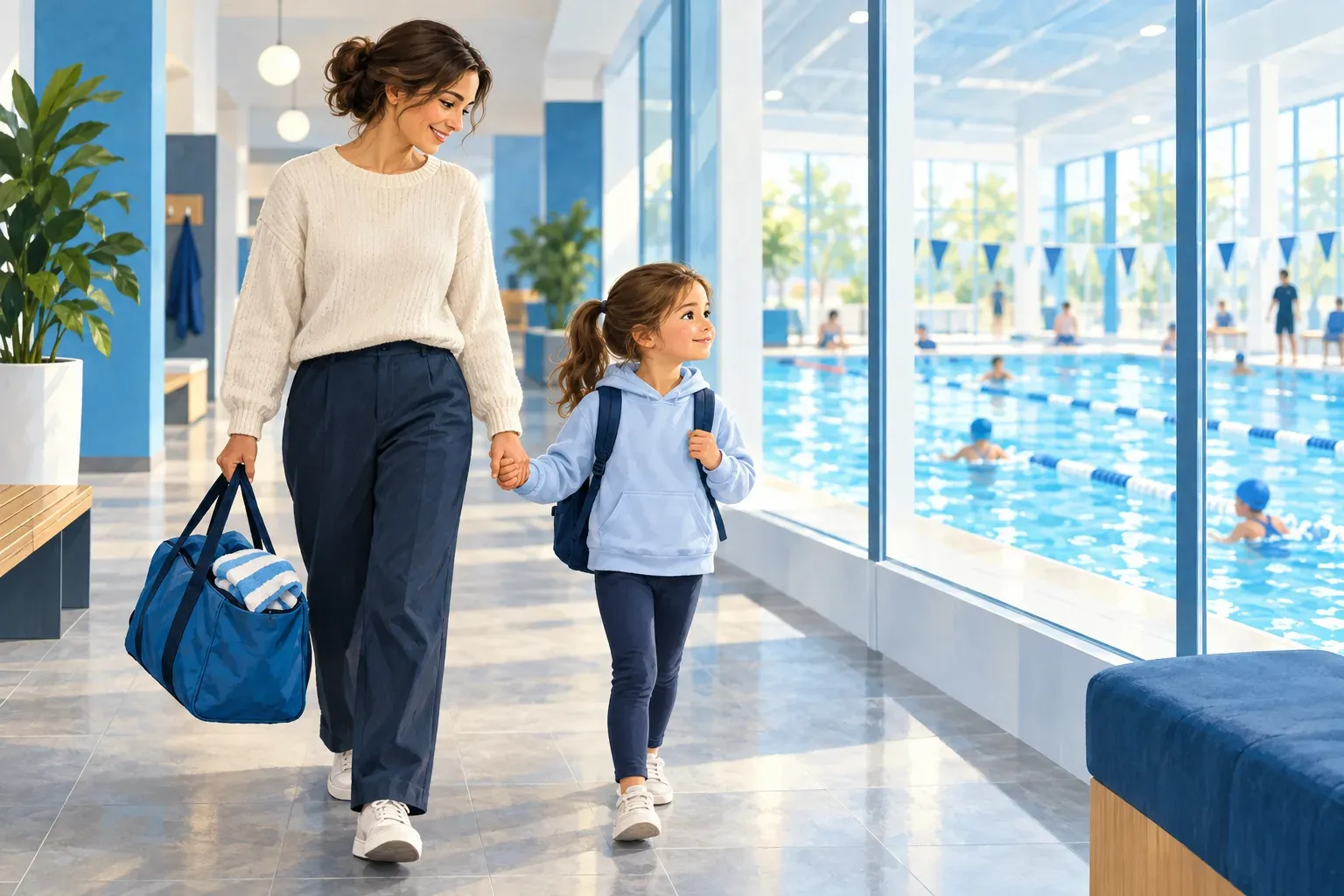
How long does a child take to learn to swim?
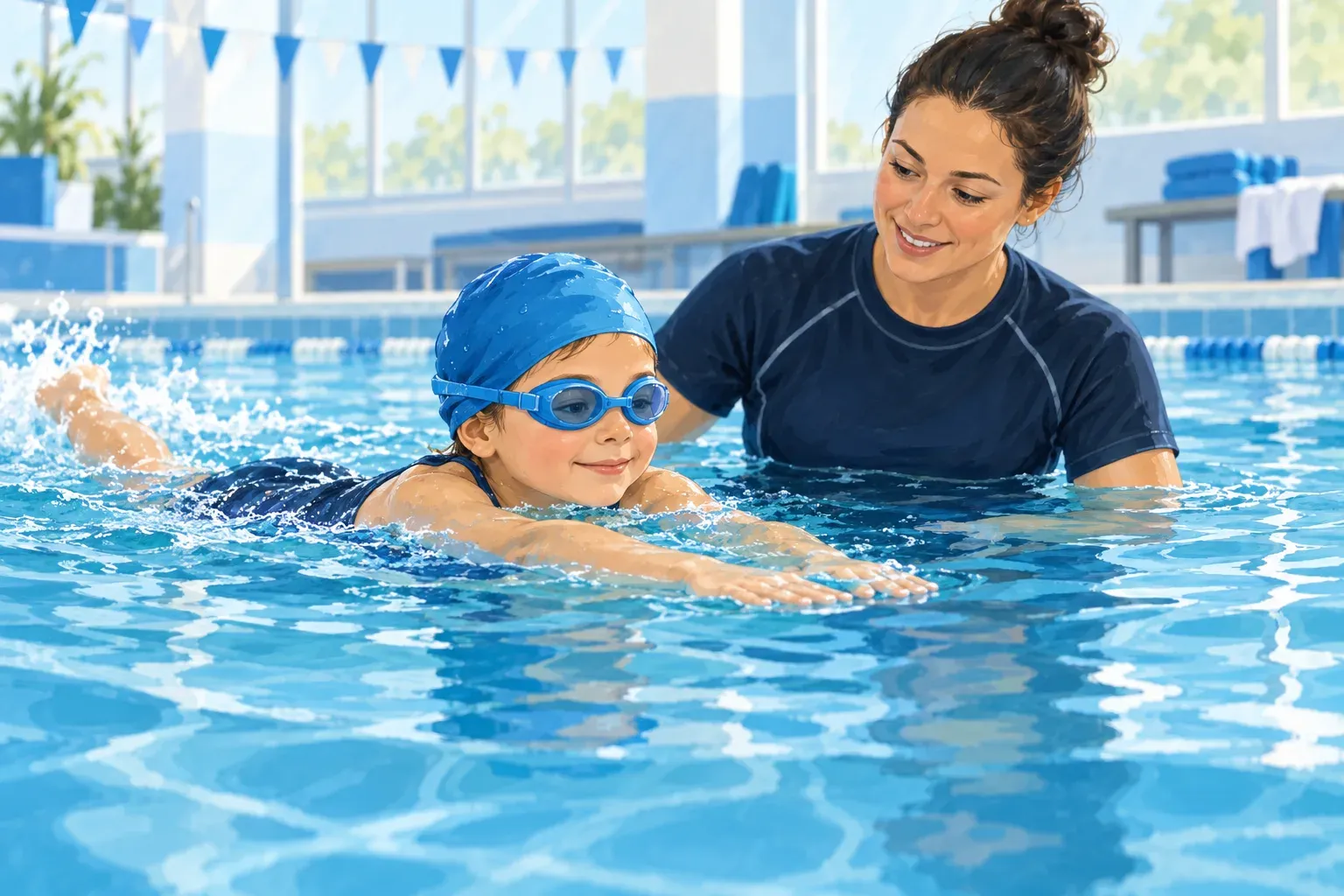
There is no single timeframe in which every child learns to swim. Progress depends on starting skills, readiness, previous experience and what we mean by swimming. Covering a first short distance independently matters, but it is only part of the picture. When planning lessons, agree on the next learning goal and a progress review without promising a fixed lesson count.
What does being able to swim actually mean?
Families use this phrase differently. One parent means moving away from the wall; another expects a good front crawl; another is thinking about summer swimming. Begin the conversation with your child's teacher by defining the goal. Movement, swimming technique and safe behaviour are related but are separate achievements.
The American Red Cross describes water competence as including risk awareness and knowing how to respond to emergencies. Ask what your child can do independently and under which conditions. Swimming briefly with an aid, for instance, does not tell you how they manage their body without it. Request an assessment from the teacher; avoid springing your own test on the child. Describing their current skills clearly helps identify the next task and makes planning more realistic.
Learning stages: from foundations to coordinated swimming
Learning may include pool rules, breath control, floating, changing body position, moving through water and coordinating swimming movements. These skills develop through connected activities. Swim England's framework also includes entering, exiting, orientation and water safety. Watching distance alone therefore gives an incomplete picture.
Imagine a child happily kicking with a board while still learning to coordinate breathing and movement. The activity may look unchanged from the viewing area, although the teacher is working towards a specific improvement: a steadier body position or calmer breathing. Ask what the exercise is intended to achieve. Repetition then becomes an understandable part of learning, rather than an apparent wait for 'real swimming' to begin. Also ask what comes next once the child can perform the current task reliably.
Why do some children learn faster than others?
Being the same age or attending the same group does not mean starting in the same place. One child already knows the pool environment; another is learning to follow instructions in water. The American Academy of Pediatrics advises considering emotional maturity, physical and developmental abilities, and comfort in water. Age alone cannot describe these differences.
Instead of comparing siblings or classmates, tell the teacher about your child's previous experience. Mention earlier lessons, long breaks and situations where they feel confident. This information helps establish a suitable starting point; it does not predict a finish date. Compare progress with the child's own earlier abilities: what do they understand better, where do they need less help, and what feels calmer? Another child's pace cannot reliably determine your child's learning timetable, even if both started on the same day.
Can a lesson count predict when a child will swim?
A lesson package defines the amount of teaching offered, not a guaranteed result. The 18-lesson plan published by LTU Aquatics includes interim assessments and different achievement levels. It illustrates why programme length and individual outcomes should be considered separately. That plan is not a universal timetable for every child or for Fedo Physique lessons.
Before booking, ask what will be taught and how progress will be discussed. A workable family schedule matters too: a plan you repeatedly cannot follow makes the learning process harder to assess. Discuss returning after missed sessions. Avoid assuming that twice as many lessons necessarily means learning in half the time. The teacher's assessment and your child's demonstrated skills tell you more than counting weeks.
Does one successful attempt mean a skill is learned?
Notice that first success without turning it into an immediate requirement for every lesson. Swim England describes an introduce–develop–master approach: a movement is introduced before it is fully mastered. The same element can therefore reappear in different activities.
Three everyday descriptions can help parents communicate: 'has tried it', 'can do it with help' and 'can do it independently'. This is a conversation aid, not an official grading scale. Tell your child what you noticed, such as listening carefully and trying again. Avoid announcing that they must now demonstrate the same performance for relatives or on holiday. The teacher should assess consistency and readiness for harder tasks. One impressive moment or video cannot replace ongoing observation.
Questions to ask about your child's swimming progress
'When will they finally swim?' is understandable, but specific skills are easier to discuss. Arrange a suitable conversation time so the teacher is not distracted from children in the water. Prepare a few questions.
Agree on one clear next goal and when to review it. This might mean doing a familiar task with less help, rather than moving groups quickly. Briefly explain the goal to your child. Clear expectations keep every lesson from becoming an exam. If feedback is simply 'everything is fine', politely ask for a concrete example.
Listen to your child too: which task makes sense now, and which needs explaining? Their answer complements the teacher's assessment and may reveal a misunderstanding. A parent may be waiting for greater distance while the child celebrates understanding one movement. Connect both observations to the agreed goal.
- What can my child do independently, and where is help still needed?
- Which skill currently limits the next learning step?
- How will you decide the current task is reliably learned?
- What should we support, and what should we avoid teaching separately?

Returning to the pool after a break
After a holiday or longer break, discuss the current situation. Explain when your child last attended lessons and which skills you discussed then. Their former group name may not fully describe what they need now. Ask the teacher to assess an appropriate starting activity and workload.
The American Red Cross children's programme develops foundations, swimming strokes and subsequent improvements step by step. The practical lesson for families is that revisiting a foundation can have a clear purpose. If your child returns to an easier activity, first ask what it is intended to achieve. This alone does not mean previous lessons were wasted. When planning the next holiday period, discuss whether reviewing current abilities beforehand would be helpful.
When can lessons end, and what comes next?
Base decisions about continuing on a discussion of abilities and family goals. Your child might improve technique, strengthen foundations or explore another suitable water activity. Ask what is established and what still needs teaching. A certificate or completed distance should not be your only consideration.
Swimming lessons never replace adult supervision. The Red Cross calls for constant attention regardless of swimming ability, with weak swimmers kept within arm's reach in water. Fedo Physique's children's swimming lessons in Klaipėda accept children aged four and over at Klaipėdos baseinas, Dubysos g. 12. When enquiring, describe current abilities and discuss a suitable starting point. The service page has the current timetable.
Frequently asked questions
Can a child learn to swim in ten lessons?
Some skills may develop within that time, but the full set cannot be guaranteed. Ask what the course covers and how your child will be assessed.
Does a longer lesson always mean faster learning?
No. Duration alone does not show whether a lesson suits a child. Discuss activities, rest, attention and time spent actively learning with the teacher.
My child swam a length. Have they had enough lessons?
That achievement matters, but it is not the whole assessment. Discuss breathing, body control, exiting the pool and water-safety knowledge too. Supervision remains essential.
Must children master every stroke before they can swim?
Mastering all competitive strokes and developing basic water competence are different goals. Discuss which abilities to strengthen first, based on your child's current level.
Why has a friend moved groups while my child has not?
Moving should depend on specific skills and group suitability. Ask about the criteria and remaining goal rather than comparing only the number of lessons attended.
Is a swimming progress diary useful for parents?
Brief notes after speaking to the teacher can help you remember goals. Record skills and assistance needed, rather than creating daily tests or competitions for your child.
What should I say when my child asks when they will swim?
Name the next small goal and something already going well. Explain that swimming develops in steps, with the teacher choosing suitable tasks. Avoid promising a finish date.
Sources
This article draws on the following guidance and publications.
- American Academy of Pediatrics: children's swim lessons and readiness
- American Red Cross: swimming safety
- Swim England: Learn to Swim stages
- Swim England: introducing, developing and mastering skills
- LTU Aquatics: 18-lesson programme and skills assessment
- American Red Cross: children's swimming programme